
There is perhaps no sound in a home more terrifying than the ominous “glug-glug” coming from a toilet that hasn’t been flushed. It evokes a specific kind of sinking feeling, occurring the moment you realize the water isn’t going down the drain but is instead threatening to come back up. We have all stood in that bathroom, staring helplessly at the porcelain and praying it is just a simple clog that a plunger can resolve.
But sometimes, the plunger just isn’t enough to solve the mystery deep underground, leaving you caught between two difficult choices: a quick clean or a major overhaul. Delaying professional intervention can lead to further damage, increasing the risk of costly repairs and potential harm to your property.
At Plumbing Doctor, we know this is a stressful decision that forces you to balance immediate budget relief against the need for long-term peace of mind. You are likely wondering: are we dealing with a temporary blockage, or has the pipe finally given up the ghost?
In this guide, we are going to walk through the murky waters of sewer maintenance together to demystify the process. We will break down the crucial differences between simple maintenance and total renovation, analyze the costs involved, and help you identify exactly what your home needs.
What Is the Difference Between Sewer Cleaning and Full Sewer Line Replacement?
At its core, the choice comes down to a distinction between routine maintenance and necessary renovation. Think of your sewer line like the arteries in your body or the engine in your car; sometimes, you just need a flush to get things moving smoothly again, while other times, parts need to be swapped out.
Sewer cleaning is the process of removing debris, grease, and minor root intrusion from inside the pipe, restoring flow without altering the structure of the pipe itself. It acts as a reset button for flow but does not fix cracks, bellies, or collapses.
Full sewer line replacement, on the other hand, is comparable to major surgery and involves removing or bypassing the old, damaged pipe to install a brand-new one.
Full replacement means replacing the entire line when damage is extensive or when the pipes are aging, rather than just addressing localized issues. This is the “nuclear option” chosen over spot repairs when the entire line is compromised, often serving as the only permanent solution for aging infrastructure in our service area.
We need to set realistic expectations here: cleaning is a short-term fix if the underlying structure is failing, whereas replacement resets the clock on your plumbing system completely.
What Is Sewer Cleaning and When Is It Enough?
Sewer cleaning is our first line of defense, and we usually try it first because it is faster, cheaper, and significantly less invasive. At Plumbing Doctor, we rely on two primary methods: professional snaking for minor clogs and Hydro Jet Sewer Cleaning for the heavy lifting.
While snaking punches a hole through the blockage, hydro-jetting blasts water at high pressure to scour the pipe walls clean. This “heavy artillery” approach cuts through grease, soap scum, and even small tree roots like a laser, ensuring the entire diameter of the pipe is clear.
Professional drain cleaning not only resolves blockages but also helps maintain clean and odor-free drains, preventing future plumbing problems.
Cleaning is usually sufficient when the pipe structure remains sound and the problem is purely based on what is trapped inside. This covers buildup from years of kitchen grease or the accidental flushing of “flushable” wipes (which, as we always warn, are not actually flushable).
Clogged drains are a common issue that can lead to backups and water damage if not addressed promptly. Often, organic matter such as grease, fats, oils, and food waste can contribute to these clogs.
For minor clogs and buildup, an initial cleaning attempt may include pouring hot water down the drain to help dissolve blockages caused by grease or organic matter, this method is particularly effective for certain types of blockages, but caution should be used with specific pipe materials.
We also find that seasonal root intrusion often responds well to cleaning; if the roots are small and the pipe hasn’t cracked, a regular hydro-jet service can manage the issue perfectly without the need for excavation.
What Is Full Sewer Line Replacement and When Is It Necessary?
Sometimes, no amount of scrubbing can fix a broken object, and full sewer line replacement becomes necessary when the physical integrity of the pipe is compromised.
In the past, traditional replacement meant digging a massive trench across your yard, involving heavy machinery and a week of mud that left a scar on your property. Fortunately, we specialize in Trenchless Sewer Replacement, a modern technology that allows us to replace the pipe with minimal digging.
We recommend replacement when the pipe has collapsed, bellied (sagged), or corroded beyond repair, as cleaning in these scenarios is simply throwing money away.
Significant damage, such as that caused by extensive tree root invasion, can also make full replacement necessary. In older homes, cast iron pipes are common and are especially susceptible to cracking, corrosion, and eventual deterioration over time.
You cannot clean a pipe that has crumbled into the soil or separated at the joints; the only option is to replace it to restore a sealed system and ensure proper flow throughout your sewer system.
This is a long-term investment that ensures your home’s waste management system functions correctly for decades to come, often with a 50-year life expectancy on the new materials.
What Are the Common Signs You Only Need Sewer Cleaning?
The first sign of a sewer line problem is often slow draining sinks or other fixtures. Your house will usually give you polite hints before it starts screaming, starting with slow drains affecting multiple fixtures.
If the tub takes forever to drain and the kitchen sink is sluggish, slow draining sinks usually indicate a main line is clogged, where buildup or debris has narrowed the exit path.
Another common sign is the “talking” toilet, where you hear gurgling noises from the bowl when the washing machine runs. These gurgling noises are a warning sign of potential blockages, as air trapped in the line tries to escape around a clogged section, suggesting the pipe is choked but not collapsed.
Additionally, unpleasant odors wafting from drains without actual backup can indicate bacteria or debris buildup that a good hydro-jetting can scour away. If you plunge the toilet and it works fine for six months, you likely just need routine maintenance to manage occasional clogs.
What Are the Warning Signs That Indicate Full Sewer Line Replacement?
There are times when the symptoms are much more aggressive, acting as red flags that tell us the system is failing catastrophically. The most obvious sign is frequent or recurring sewer backups; if you have the line cleaned and it backs up again two weeks later, the pipe is likely broken.
Recurring backups can also be a result of sewer line breakage, which allows debris and soil to enter the line and block flow. We see this often in older homes with clay or Orangeburg pipes where structural failure and deteriorating pipes, due to cracks, corrosion, or collapse, make cleaning ineffective and full sewer line replacement necessary.
External signs are equally alarming, such as soggy patches, sinkholes, or foul smells in the yard, which indicate wastewater is escaping the pipe and saturating the soil. Leaks from pipe separation or cracks can cause these symptoms and should be addressed promptly.
This means the pipe has likely collapsed or separated at a joint, requiring immediate attention to prevent environmental hazards. Unresolved blockages or breaks can also expose residents to contaminated water, posing serious health risks.
Furthermore, if you see sediment, mud, or rocks appearing in your bathtub or basement drain, the pipe has breached and is taking in the surrounding earth, necessitating immediate replacement.
How Do We Determine Whether Cleaning or Replacement Is Needed?
We never want to guess when it comes to thousands of dollars in repairs, so the only way to know for sure is to look inside the sewer pipe using our Sewer Video Inspection technology.
We feed a high-definition, waterproof camera into the sewer line, which transmits a live video feed to a monitor, showing our technicians exactly what is happening underground.
This technology allows us to see if the issue is just a ball of grease, if a tree root has shattered the clay pipe, or if there are defects such as small cracks or minor cracks in the sewer pipe.
Interpreting the footage helps us identify subtle issues like misalignment, corrosion, “bellies” where water pools and collects debris, and even minor cracks or small cracks that may be suitable for spot repair rather than full replacement.
Proper diagnosis prevents us from cleaning a pipe that needs replacing, or replacing a pipe that just needs cleaning. Spot repair is a cost-effective solution for localized damage, such as cracks or leaks confined to a specific area, and our camera inspections help determine if this approach is appropriate.
We have seen homeowners spend thousands on repeated snaking, only to find out the pipe collapsed all along, and our camera inspections effectively prevent that waste.
How Does Sewer Cleaning Compare to Full Sewer Line Replacement?
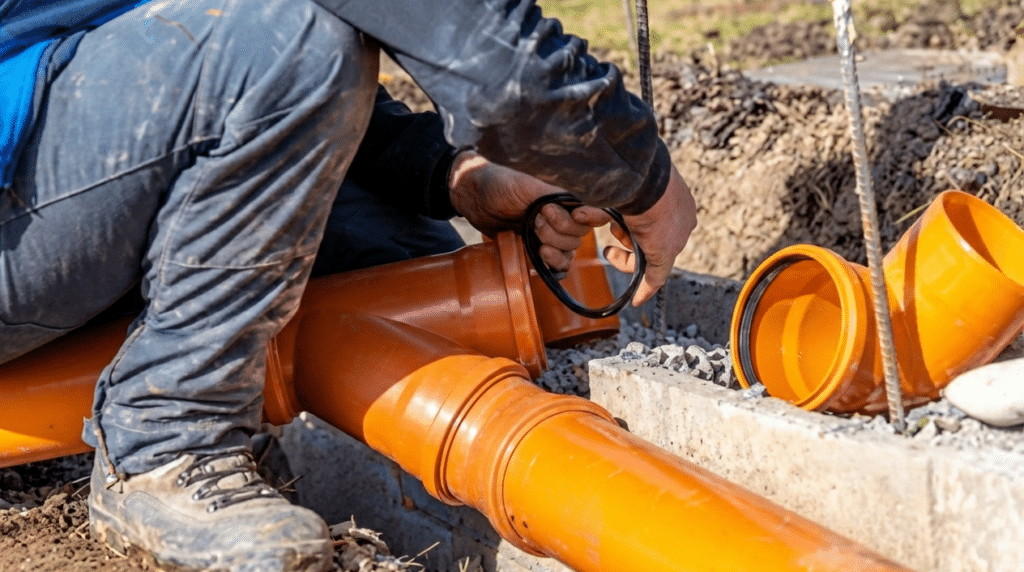
When weighing your options, it is important to look beyond just the price tag and consider timelines, disruption, and longevity.
Drain cleaning is a low-cost maintenance expense that fits comfortably into a standard monthly budget and resolves immediate crises in a few hours. In some cases, sewer repair may be an appropriate alternative to full replacement, especially when the damage is localized or less severe.
In contrast, full sewer line replacement is a capital improvement that can cost thousands of dollars and may disrupt your home life for a day or two depending on the method used.
However, the lifespan of the two solutions varies drastically. Drain cleaning lasts until the next clog forms, maybe a year, maybe five, while sewer repair can extend the life of your existing line if the issue is limited.
For severe or recurring problems, full replacement is often the best solution, as a new trenchless sewer line is rated to last 50 years or more. Replacement is effectively a “one and done” solution for your lifetime in the home, offering peace of mind that maintenance simply cannot match.
What Are Trenchless Sewer Line Replacement Options?
If you do need replacement, we have good news: you likely won’t need to dig up your entire yard, driveway, or rose bushes. At Plumbing Doctor, we utilize trenchless technology like Pipe Bursting and Cured-in-Place Pipe (CIPP) lining.
Pipe lining involves inserting an epoxy-saturated liner into the old pipe and inflating it to cure into a rock-hard new pipe inside the old one, essentially creating a “pipe within a pipe.”
Maintaining drain traps is also crucial, as they help prevent grease and debris from entering the sewer line and causing blockages, supporting the effectiveness of these trenchless solutions.
Pipe bursting is another method where we pull a new pipe through the old one using a bursting head that fractures the old pipe outward. This replaces the line without needing a continuous trench, making it perfect for lines running under driveways, patios, or expensive landscaping.
These methods minimize the mess and are often completed in just 1 to 3 days, compared to the week-long chaos of traditional excavation. Full sewer line replacement not only resolves immediate issues but also significantly improves the overall drainage system efficiency, reducing the risk of future backups and slow drains.
How Much Does Sewer Cleaning Cost Compared to Replacement?
Talking about money is uncomfortable, but it is necessary as the cost difference is the biggest factor for most families. Sewer line cleaning services typically range from a few hundred dollars, making it an accessible repair for most emergency funds.
Commercial properties also face similar sewer issues and costs, as clogged drains and sewer problems are common in both residential and commercial settings.
Conversely, replacement costs vary based on location, depth, and length, often requiring financing or insurance involvement due to the skilled labor and materials required.
We always warn homeowners about the “money pit” scenario of inaction. Paying for an emergency cleanout four times a year adds up surprisingly fast. A main sewer line clog can lead to significant expenses if not addressed promptly, potentially causing water damage and requiring professional intervention.
Over a period of five years, you might spend half the cost of a new line just on band-aid fixes that don’t solve the underlying structural issues.
How Can Homeowners Prevent Sewer Line Problems in the Future?
Whether you choose to clean or replace, we all want to avoid dealing with sewage ever again, and prevention is the key. If you have an older home, schedule a Sewer Video Inspection every two years to catch small root intrusions early.
We cannot stress enough that keeping grease, oil, feminine hygiene products, and improper items out of your drains and garbage disposal is essential for the health of your home’s plumbing system and the entire drain system.
Additionally, consider installing or maintaining a sump pump, especially in basements or low-lying areas, to help prevent sewage backups during heavy rain.
5 Pro Tips for Sewer Health
- Use Enzyme Cleaners: Monthly enzyme treatments help eat away organic buildup safely without damaging your pipes like harsh chemicals can. Regularly treating all drains, including sinks, toilets, and floor drains, can help prevent clogs in the main sewer line.
- Plant Trees Wisely: Be mindful of where you plant; keep aggressive root systems like willows and maples far from sewer lines to prevent intrusion.
- Install a Backwater Valve: This device is crucial for preventing city sewers from backing up into your basement during heavy storms. Also, monitor floor drains for any signs of water backup, which can indicate main sewer line issues.
- Update Your Cleanout: Ensure your main cleanout is accessible so our technicians can reach the line easily without removing a toilet. Easy access helps diagnose problems affecting sinks, toilets, and floor drains quickly.
- Check Your Insurance: Some homeowner policies offer add-ons for buried utility line coverage, and it is worth checking if you are eligible.
FAQs
What is the difference between sewer cleaning and full sewer line replacement?
Cleaning removes blockages from inside the pipe to restore flow, acting as a maintenance task. Replacement involves removing or bypassing the old pipe to install a brand new one, which is necessary when the structure is damaged.
How do I know if my sewer line needs cleaning or replacement?
A Sewer Video Inspection is the only 100% accurate way to know for sure. Generally, occasional clogs imply a need for cleaning, while structural cracks, collapses, or constant backups suggest replacement is required.
Can sewer cleaning prevent the need for sewer line replacement?
Yes, regular hydro-jetting removes roots and grease that can eventually cause pressure buildup and cracks. By keeping the flow open, you extend the life of your existing pipes significantly.
How often should sewer lines be professionally cleaned?
For older homes or those with many trees, we suggest cleaning every 18 to 24 months. Newer homes may only need it every few years or upon noticing specific clog symptoms.
Is trenchless sewer line replacement better than traditional replacement?
It is usually considered better because it is faster and preserves your landscaping and driveway. However, it requires the old pipe to be somewhat intact to guide the new one, so it isn’t always an option for completely collapsed lines.
How much does sewer cleaning cost compared to replacement?
Cleaning costs a fraction of replacement, usually hundreds versus thousands of dollars. However, replacement is a one-time cost for decades of use, whereas cleaning is an ongoing maintenance expense.
Can tree roots be removed without replacing the sewer line?
Yes, hydro-jetting is very effective at cutting out tree roots from inside the pipe. However, the roots will eventually grow back, so this is a maintenance solution rather than a permanent cure.
Will sewer line replacement increase home value?
Absolutely, as a new sewer line is a major selling point for potential buyers. It assures them they won’t face a plumbing disaster immediately after moving in, which can make closing the deal much smoother.
Do plumbers inspect sewer lines before recommending replacement?
Reputable plumbers always should, as we believe in diagnosing before digging. If a plumber suggests replacement without a camera inspection, we highly recommend getting a second opinion.
Conclusion
Dealing with sewer main line issues is never fun, but it doesn’t have to be a nightmare if you are armed with the right information. By understanding the difference between a simple cleaning and a necessary replacement, we can make smarter, more cost-effective decisions for our homes. We have explored the signs, the costs, and the technology that helps us see underground, all intending to keep your home safe, dry, and functional.
If you hear that dreaded gurgle or smell something off in the yard, don’t wait for the problem to escalate. For the feel-good plumbing service that treats your home like our own, give the Plumbing Doctor® a call today. Contact us if you are looking for a reliable plumbing service in Chico, Davis, Dixon, East Bay, Elk Grove, Fairfield, Lincoln, Marysville, Oroville, Reno, Sacramento, West Sacramento, Sparks, Vacaville, Winters, Woodland and Yuba City.