
It never announces itself with a polite memo. It’s a slow drain that turns into a full stop, a whiff in the bathroom that won’t leave, or a yard spot that looks like it’s been secretly overwatered. We ignore it for a day, then two, and suddenly we’re searching “sewer line problem” at midnight.
That’s when the mental picture shows up: orange cones, a mini excavator, and a trench that slices the lawn in half. For years, that picture has been pretty accurate.
But sewer replacement has gotten smarter. Modern trenchless techniques address the significant challenges of traditional sewer repair, such as extensive excavation, environmental disruption, and the need for major landscaping repairs.
In many cases, trenchless sewer replacement (sometimes called trenchless sewer pipe replacement or trenchless sewer line replacement) lets us repair or replace a damaged line using small access points, not a long trench. It’s easier on your property, and it brings real, measurable environmental benefits.
In this guide, we’ll walk through the environmental benefits of trenchless sewer replacement in simple terms. We’ll cover how it works, why it’s considered an eco-friendly sewer repair method, and when traditional digging still makes sense.
What is trenchless sewer replacement and how does it work?
Trenchless sewer replacement is exactly what it sounds like: we fix the pipe without excavating the entire path of the line.
If you’ve been searching terms like trenchless sewer replacement or trenchless sewer pipe replacement, this is the category of solutions you’re looking at.
Instead of tearing a trench from the house to the street, we create one or two access points and work through those openings.
The process involves minimal excavation, allowing us to repair or replace only the damaged pipes while leaving the rest of your property and landscaping undisturbed.
Before we choose a method, we confirm what’s happening inside the pipe. Once we know the condition, we typically recommend one of two approaches: cured-in-place pipe lining (CIPP) or trenchless pipe bursting.
How does cured-in-place pipe (CIPP) work?
CIPP is the “rebuild from the inside” option. We insert a flexible liner into the existing pipe, then cure it so it hardens into a smooth, sealed surface.
If the pipe is still mostly in place but has cracks, corrosion, or small separations, CIPP can be a strong fit. It’s also one of the most popular no-dig sewer replacement benefits because it avoids major excavation and helps stop leaks.
Trenchless pipe repair offers an efficient solution for repairing damaged pipes with minimal disruption to the environment and surrounding property.
CIPP uses environmentally sustainable materials such as high-density polyethylene (HDPE) or epoxy resins, which are highly durable, resistant to corrosion, and can last 50 to 100 years. HDPE is also 100% recyclable, further reducing environmental impact.
How does Spray-In-Place Pipe (SIPP) work?
Spray-In-Place Pipe (SIPP) is another trenchless rehabilitation method that focuses on coating the inside of an existing pipe rather than inserting a liner. Using specialized equipment, a liquid epoxy or polymer is sprayed onto the interior pipe walls where it cures into a smooth, corrosion-resistant barrier.
SIPP is especially effective for pipes that are structurally sound but experiencing corrosion, scaling, or minor deterioration. It can be used across various pipe materials and sizes, making it a flexible option for both residential and commercial applications.
Because SIPP uses a thin coating rather than a full liner, it often requires fewer materials and produces less waste, making it an environmentally friendly sewer repair option.
How does trenchless pipe bursting work?
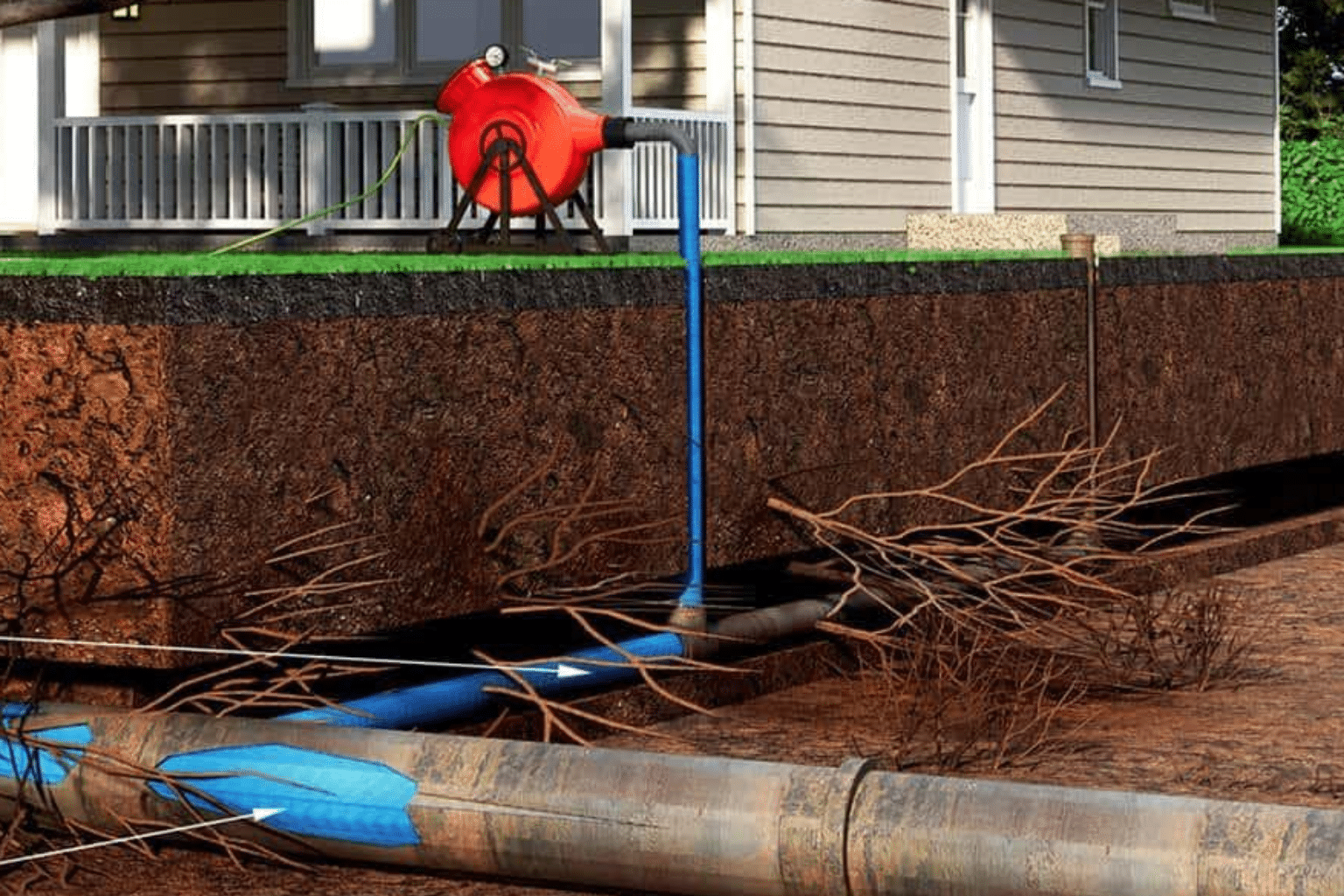
Pipe bursting is the “fresh start” option and is considered a form of complete replacement, especially for severely damaged or aging pipes. We pull a new pipe through the old line while a bursting head breaks the damaged pipe apart as it goes.
This is usually recommended when the existing pipe is too collapsed, too brittle, or too invaded by roots to reliably line. It’s also where trenchless pipe bursting environmental benefits stand out, because we replace the line without turning the yard into a demolition zone.
Directional drilling is another trenchless technique sometimes used to install new pipes with minimal excavation, further reducing environmental impact.
How does trenchless sewer replacement reduce environmental disruption?
Traditional sewer replacement doesn’t just move dirt. It disrupts soil layers, cuts through root systems, and can change how water moves across your property after the job is done.
Traditional methods often require extensive excavation, which disturbs the surrounding soil, increases the risk of soil erosion, and can damage local wildlife habitats.
Trenchless work keeps the ground more intact because we’re not opening a long trench. Less disturbed soil usually means lower risk of erosion, less runoff after rain, and fewer surprise drainage problems later. It is always good to know the difference between trenchless vs traditional sewer replacement.
How does it protect landscaping and outdoor spaces?
This is the part homeowners love, even if they never say it out loud. Trenchless sewer replacement can protect landscaping by avoiding the “straight-line” trench that wipes out lawns, gardens, and tree roots.
Trenchless methods help protect local flora and natural habitats by causing minimal disruption to the landscape, preserving ecosystems and biodiversity.
It can also preserve sidewalks, driveways, patios, and walkways. When we don’t break concrete or asphalt, we’re not creating extra waste, or extra repairs, after the pipe is fixed.
Trenchless sewer repair minimizes disruption to local wildlife habitats and requires only a small hole for access, which does not affect local wildlife or trees.
Why does trenchless sewer replacement create less waste?
A full trench job produces a lot of leftovers. Soil piles up, sod gets tossed, concrete comes out in chunks, and asphalt turns into rubble.
That debris has to go somewhere, which usually means dumpsters and multiple trips to a landfill. Trenchless methods reduce excavation waste in sewer repair by keeping digging limited to access points.
Trenchless sewer replacement results in less waste generation and waste production compared to traditional methods, making it a more environmentally friendly option. It also generates significantly less construction waste and uses fewer raw materials, supporting waste reduction and sustainability.
Here’s where the trenchless sewer replacement environmental impact becomes obvious:
- We remove far less soil, so we don’t need to transport and replace as much.
- We damage less concrete and asphalt, so fewer new materials are needed for patching.
- We cut down on dump truck trips, which reduces emissions and neighborhood disruption.
- We send less debris to landfills.
Less waste isn’t just cleaner. It’s fewer resources used end-to-end.
How does trenchless sewer replacement lower emissions and energy use?
Traditional excavation tends to bring a parade of equipment. Excavators, loaders, jackhammers, and multiple trucks often run for days. Traditional methods rely heavily on the use of heavy machinery, which increases carbon emissions, carbon dioxide, and air pollution.
Trenchless jobs usually use fewer heavy machines, and they often finish faster. Trenchless techniques can produce up to 90% fewer greenhouse gas emissions and have a lower carbon footprint due to reduced use of heavy machinery.
These methods also use less water than traditional cut-and-replace approaches, further supporting sustainability. Reducing carbon emissions through trenchless sewer repair helps mitigate climate change and contributes to a more sustainable future.
Less machine time typically means less fuel burned, fewer emissions released, and less noise and dust in the neighborhood. Using trenchless techniques can significantly reduce noise and air pollution during infrastructure repair.
What does that look like in a neighborhood?
It looks like fewer mornings waking up to engine noise. It feels like less dust on cars, fewer blocked driveways, and fewer “sorry, we’re working here” moments.
Trenchless sewer replacement minimizes disruption to neighborhoods by reducing road closures and traffic congestion during repairs. This approach not only benefits residents but also minimizes disruption to local wildlife habitats.
And yes, it’s one of the rare repairs where the neighbors might actually be grateful it didn’t turn into a weeklong spectacle.
How does trenchless sewer replacement help protect groundwater and soil?
When a sewer line cracks, it doesn’t just cause backups. It can leak wastewater into the soil, which is a bigger deal than most people realize. Trenchless methods protect the surrounding environment and local ecosystems by minimizing soil disturbance and reducing the risk of contamination to the surrounding ecosystem.
Those leaks can contribute to contamination and, in some cases, increase risk to groundwater, especially in areas with shallow water tables. Trenchless sewer repairs conserve water by sealing leaks, preventing groundwater infiltration, and reducing water waste.
The risk of contaminating local groundwater sources with sewage leaks is lower with trenchless methods, making them a safer choice for the surrounding environment.
CIPP creates a sealed liner that blocks leaks and infiltration. Pipe bursting replaces the line entirely with new pipe joints and materials designed to resist failure. Trenchless sewer repair uses less water than traditional methods and supports water conservation efforts, further benefiting local ecosystems.
Why is trenchless sewer replacement considered a sustainable long-term solution?
Sustainability isn’t only about how we work today. It’s about how often we have to come back and do it again.
Trenchless materials are designed for long service life, which can mean fewer future repairs and fewer repeat disturbances to the soil and landscaping. Trenchless methods are especially valuable for addressing aging infrastructure, helping maintain the long-term health of the sewer system and plumbing system.
The advanced technology used in trenchless repairs enhances durability and sustainability, ensuring that repairs are both effective and environmentally friendly. Over time, that durability turns into a real sustainability win.
When a solution lasts, the environmental footprint shrinks. Fewer projects over the life of the home means fewer trucks, fewer materials, and less disruption overall.
Trenchless vs traditional sewer replacement: what’s the environmental impact?
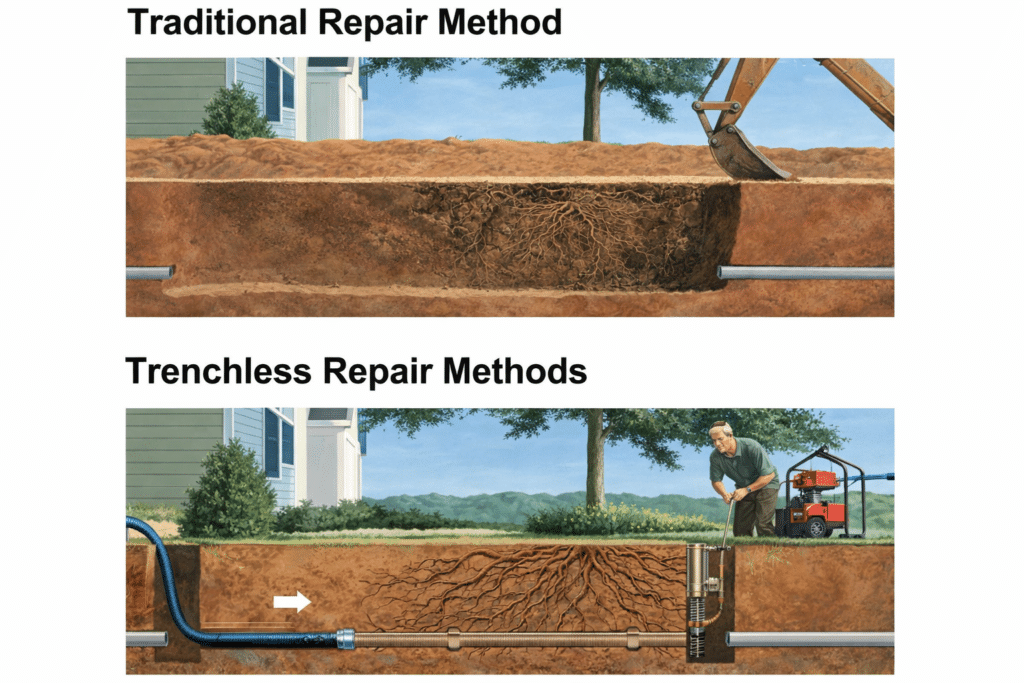
When we compare trenchless vs traditional sewer replacement environmental impact, the main difference is disturbance. Traditional sewer repair and traditional methods often require extensive digging, which causes significant environmental impact, especially in urban areas.
Traditional sewer repair methods involve extensive digging that disrupts landscaping and local ecosystems. Traditional replacement disturbs everything along the pipe’s route, while trenchless keeps disruption mostly to access points.
Trenchless tends to be the better option for the environment because it often means less soil disruption, less debris, fewer emissions, and better protection for trees and landscaping. It’s a straightforward win in many typical residential situations.
But trenchless isn’t a magic wand. If the pipe is severely misaligned, collapsed in a way that blocks lining, or access isn’t safe, traditional excavation may still be required.
Why is a sewer camera inspection important for eco-friendly sewer replacement?
If we want to be truly eco-friendly, we can’t guess. A sewer camera inspection shows us exactly what’s happening inside the line so we can avoid unnecessary digging and unnecessary work.
A camera helps pinpoint cracks, root intrusion, bellies, offsets, corrosion, and full collapses. That accuracy makes it easier to choose the least invasive option that still delivers a durable repair.
By providing a clear view of the problem, a camera inspection helps determine the best repair process, allowing for trenchless repairs and pipe repair methods that minimize environmental impact.
It also helps decide between methods. If the pipe can be rehabilitated, CIPP environmental advantages often make lining the smarter choice.
What should homeowners know before choosing trenchless sewer replacement?
Most people don’t think about their sewer line until it becomes impossible to ignore. That’s normal, and it’s also why early warning signs matter.
Timely sewer repairs using trenchless technology maximize the benefits of trenchless pipe solutions for both the environment and homeowners. If we catch a failing line early, we’re more likely to qualify for a less invasive fix. If we wait until a full collapse, choices tend to get more expensive and more disruptive.
What signs suggest a sewer line may need replacement?
If these keep showing up, it’s time to get the line checked:
- Drains slowing down across multiple fixtures
- Sewage odors inside or outside the home
- Gurgling sounds from toilets or drains
- Frequent backups or recurring clogs
- Wet patches or unusually green areas in the yard
These signs don’t always mean replacement. But they do mean it’s time for a professional evaluation.
When might trenchless be recommended?
Trenchless is often recommended when we can access the line and resolve the issue through lining or bursting without tearing everything up. Trenchless repairs provide an efficient solution with minimal disruption, making them ideal for sensitive or landscaped areas. It’s especially helpful when the sewer runs under landscaping, patios, driveways, or mature trees.
The smart move is to start with an inspection and get a clear recommendation based on what the camera shows. That also helps you avoid paying for work you don’t need, because trenchless sewer line replacement cost can vary a lot depending on pipe length, depth, access, and whether lining or bursting is the better fit.
The goal is a repair that lasts, not a repair that seems cheap today and gets expensive (and disruptive) tomorrow.
Quick reality check: how to choose the greener option without guessing
The “greenest” option isn’t a slogan. It’s the method that fixes the pipe reliably while disturbing the least. Trenchless techniques, such as trenchless pipe repair, offer numerous environmental benefits compared to traditional excavation methods, including reduced waste, less disruption to landscaping, and a smaller ecological footprint.
Here’s a simple way to choose without overthinking it:
- Start with a camera inspection so we don’t dig blindly.
- Choose CIPP when the pipe can be rehabilitated.
- Choose pipe bursting when the pipe needs full replacement.
- Use traditional excavation only when trenchless isn’t feasible or safe.
That’s how we keep the fix durable and the environmental impact lower.
FAQs
What are the environmental benefits of trenchless sewer replacement?
Trenchless replacement can reduce digging, preserve soil structure, protect landscaping, and cut down on waste and landfill debris. By using trenchless technology, the process supports waste reduction and minimizes impact on the surrounding environment, making it a sustainable choice.
It can also reduce emissions because the job often needs fewer machines and fewer days on-site.
Does trenchless sewer replacement protect trees and landscaping?
In many cases, yes. Because trenchless methods use small access points and require minimal excavation, we can often avoid cutting through major root systems and keep lawns, gardens, and hardscape intact. This minimal excavation also helps protect the surrounding soil and reduces disruption to local wildlife during repairs.
How does trenchless sewer replacement reduce waste and debris?
Traditional digging can generate piles of soil, broken concrete, and asphalt. Trenchless methods usually limit excavation, which reduces excavation waste in sewer repair and reduces the number of truckloads heading to a landfill.
In addition, trenchless sewer replacement significantly lowers waste generation and waste production compared to traditional excavation, making it a more environmentally friendly and sustainable option.
Is trenchless sewer replacement always an eco-friendly option?
It’s often the more eco-friendly choice, but it isn’t always possible. Some situations still require excavation, and the best option is the one that solves the problem safely and permanently.
What is more environmentally friendly: pipe lining or pipe bursting?
If the pipe is still structurally sound, pipe lining can be the lighter-impact option because it avoids full replacement. Both pipe repair methods, pipe lining and trenchless pipe repair, offer sustainable, long-term solutions with minimal environmental impact.
If the pipe is badly damaged, pipe bursting may be more sustainable long-term because it prevents repeated failures and future disruption.
Conclusion: A cleaner fix starts with a smarter plan
Sewer problems are stressful enough without turning the yard into a disaster zone. When trenchless sewer replacement is an option, it can be one of the cleanest ways to solve a messy problem.
The environmental benefits are mostly about doing less harm while still getting a durable repair. We dig less, haul less, burn less fuel, and protect more of what’s already in place.
If we want the most eco-friendly outcome, the best first step is simple: get a sewer camera inspection and let the pipe’s condition guide the plan. From there, we can choose the least invasive solution that still delivers a strong, long-lasting repair.
And if you’re googling trenchless sewer line replacement near me, focus on providers who lead with camera diagnostics and explain why a specific trenchless method makes sense for your pipe, not just a one-size-fits-all pitch.
Contact us if you are looking for a reliable plumbing service in Chico, Davis, Dixon, East Bay, Elk Grove, Fairfield, Lincoln, Marysville, Oroville, Reno, Sacramento, West Sacramento, Sparks, Vacaville, Winters, Woodland and Yuba City.