
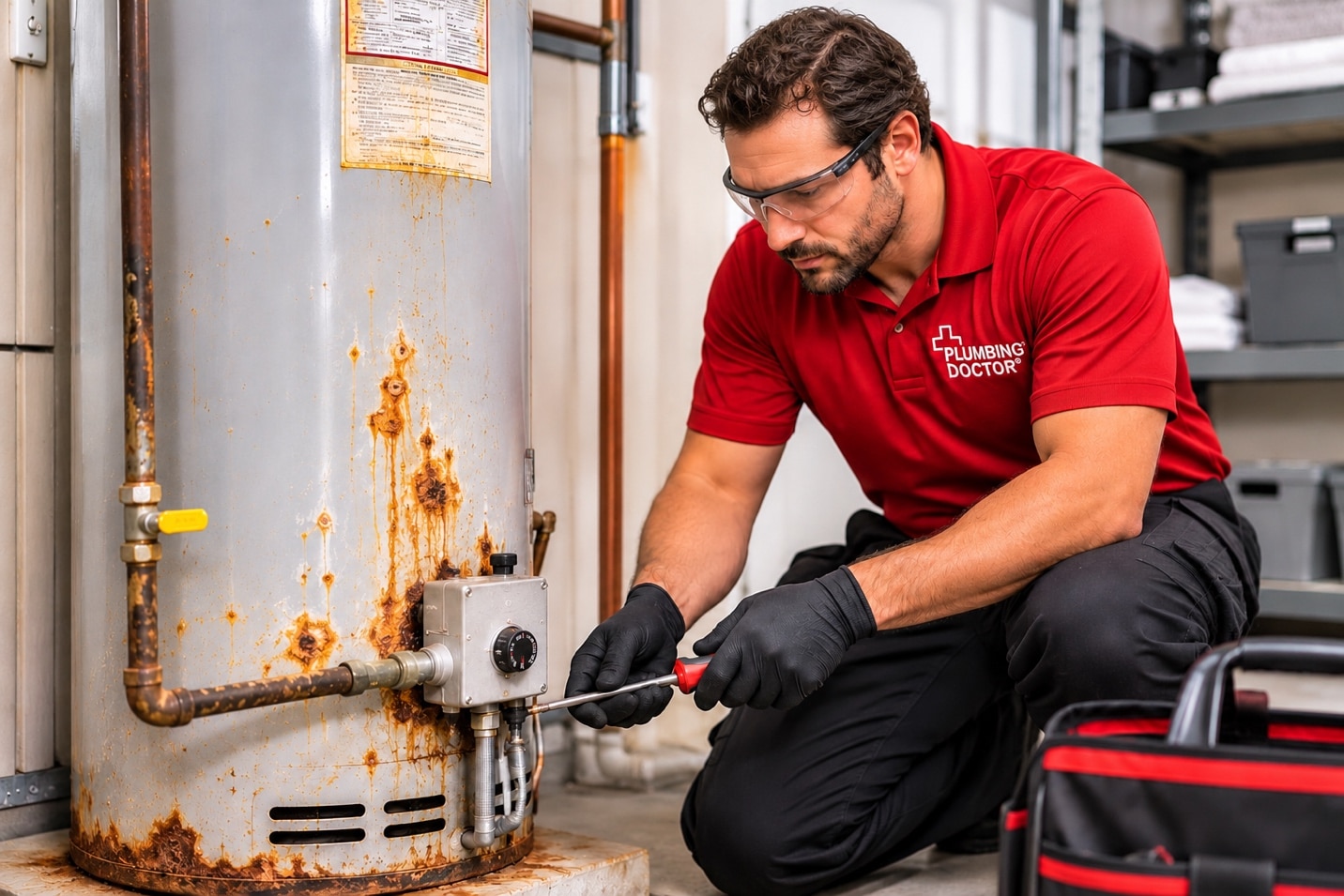
A sudden loss of hot water quickly disrupts your daily routine. When your water heater starts malfunctioning or leaking, you face an immediate decision: should you pay for a quick repair or invest in a brand-new system?
Choosing between water heater repair and replacement depends on several connected factors. Rather than focusing on just one detail, you need to weigh the unit’s overall condition, age, damage type, total repair cost, past reliability, and operating efficiency.
For instance, a minor fault in a fairly new unit usually calls for a fast fix, while an aging tank with severe structural damage or repeated breakdowns usually points toward replacement.
Understanding how these key factors work together will help you make a confident, cost-effective decision for your home. If you are experiencing major underground utility issues alongside water heater trouble, such as severe mainline damage that requires a trenchless sewer replacement, knowing when to bring in a professional plumbing company is essential.
How Does the Age of Your Water Heater Affect the Decision?
Every water heater has an expected service life. Traditional tank water heaters generally last between 8 and 12 years, whereas tankless water heaters can operate for 15 to 20 years or more with routine maintenance.
To find the age of your unit, check the manufacturer’s label attached to the side of the tank or main casing. The manufacture date is usually printed clearly near the top, or encoded directly into the first few digits of the serial number (such as the month and year of production).
Comparing your unit’s current age against its expected lifespan provides a clear baseline for your choice:
- Newer Units (Under 6 to 8 Years Old): Investing in repairs usually makes sense because the core components and internal tank structure still have plenty of usable life left.
- Older Units (Nearing or Past 10 Years): A major repair on an aging standard tank offers lower overall value. Even if a technician replaces one failed component, other worn parts are likely to break down soon after, often leading to frequent repairs.
Age alone does not automatically mean you must replace your unit. Regular maintenance and proper maintenance can help older units last longer, and a water heater that has been flushed regularly, maintained well, and only needs a small part replaced may still serve your household reliably for a few more years.
When evaluating aging plumbing systems, homeowners often look up experienced plumbers near me to get an accurate on-site assessment.
Which Water Heater Problems Can Be Repaired, and Which Require Replacement?
Identifying the exact root cause of a failure determines whether a simple fix will restore your system or if the damage is irreversible.
Common Repairable Issues
Many standard operational faults are straightforward to repair by replacing worn mechanical or electrical parts:
- Faulty Thermostats or Heating Elements: On electric units, a burnt-out element or faulty thermostat can cause inconsistent water temperature or lukewarm water, and replacing the failed part can restore performance in a water heater with minor component failures.
- Pilot Light or Igniter Failures: Gas units often suffer from pilot light issues, including dirty pilot orifices, failing thermocouples, or worn electronic igniters.
- Leaking Valves or Fittings: Small drips around the pressure relief valve, drain valve, or inlet/outlet pipe connections can often be fixed by tightening connections or replacing the valve.
Issues Requiring Replacement
Certain types of physical and structural damage cannot be safely or permanently repaired:
- Leaking Water Heater Tank: Once the internal steel tank corrodes and ruptures, it cannot be welded or patched. Major leaks usually point to critical tank failure and require a full system replacement.
- Severe Internal Corrosion: Advanced internal rust weakens the vessel and leads to imminent tank failure.
- Cracks or Structural Damage: Over pressurization or severe sediment expansion can fracture the internal lining, creating serious safety hazards.
Strange noises often result from sediment buildup in the tank, including rumbling sounds coming from the base or tank popping, but in an older unit, that damage can also justify replacement to avoid future breakdowns and costly repairs.
Because external drips can travel from top connections down to the base, a professional plumber must confirm the exact source of a leak before you make a final decision.
To learn more about identifying where water is coming from, read about common water heater problems and causes and inspect the unit carefully if you notice your water heater leaking. Common signs your water heater has irreversible damage include internal corrosion and structural failure.
Just as a cracked water tank cannot be patched, broken underground pipes usually require a specialized trenchless sewer pipe replacement to restore long-term function without destroying your yard.
How Should Repair Costs Be Compared With Replacement Costs?
Comparing the short-term cost of a fix against the long-term cost of a new installation requires looking at the total financial picture. Repair costs typically range from $400 to $1,800.
When evaluating a replacement estimate, remember to include all associated expenses, such as labor, disposal fees for the old unit, local permit charges, and any necessary upgrades to your plumbing, gas lines, electrical supply, or venting systems.
Basic replacement costs often range from $2,500 to $3,500+, while the final upfront cost for professional water heater installation depends on those added items. Much like budgeting for major home projects, such as evaluating the total trenchless sewer line replacement cost, knowing all labor and equipment variables upfront prevents surprises.
A standard industry guideline for this comparison is the 50% Rule for Water Heater Replacement:
The 50% Rule: If the total estimated cost of repairing your current water heater reaches or exceeds 50% of the cost of buying and installing a brand-new unit, replacing the system is usually the smarter investment.
For example, if fixing a major component on an 8-year-old system costs $600, but a full replacement costs $1,100, the repair exceeds 50% of the replacement expense. Once installation-related items are included, full replacement costs often reach $1,200 to $3,000 or more.
Investing that money into a new system gives you a fresh manufacturer warranty and renewed reliability, especially when the unit’s repair history suggests declining dependability.
Conversely, paying $150 for a minor fix on an older unit might sound cheap initially, but it offers poor overall value if the rest of the system is failing and another expensive breakdown occurs shortly after.
In many cases, replacement may save money over time by avoiding costly repairs and future breakdowns.
How Do Previous Repairs and Reliability Affect the Choice?
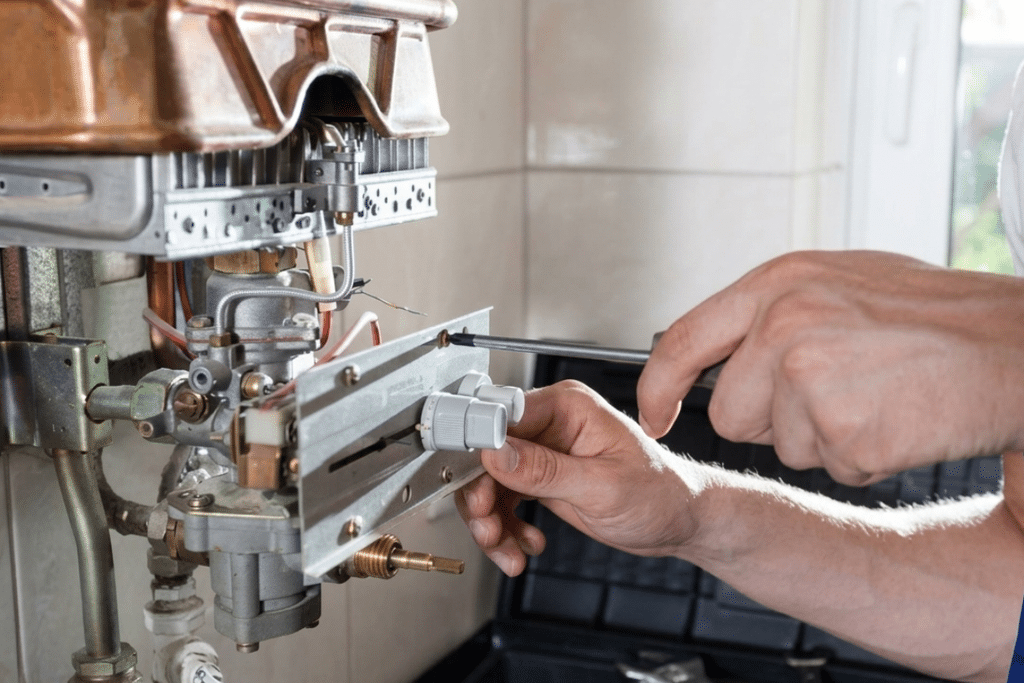
A single, isolated repair on an otherwise dependable water heater is usually worth making. However, your unit’s repair history matters, and recurring breakdowns signal systemic wear across the entire unit.
Consider the total amount of money and time you have already spent on service calls over the last 12 to 18 months. Frequent repairs and a poor repair history often indicate the unit is headed for future breakdowns. If you find yourself dealing with constant repairs or scheduling repeated technician visits, those incremental expenses can lead to costly repairs instead of helping you save money.
When evaluating a proposed repair, ask whether the fix addresses the real underlying issue or simply acts as a temporary band-aid. Delaying an inevitable replacement on an unreliable unit increases the risk of unexpected tank failure and potential water damage to your property.
At a certain point, replacement becomes the smarter investment, because repeated service visits can make an unreliable unit a less cost-effective choice than replacing it.
Should Declining Performance or Efficiency Lead to Replacement?
As water heaters age, sediment buildup collects at the bottom of the tank. This layer acts as an insulating barrier between the heat source and the water, reducing heating efficiency and forcing the system to run longer, which can drive up high energy bills.
Symptoms of declining performance include:
- Slow Recovery Times: The tank takes much longer to reheat water between showers.
- Inconsistent Water Temperatures: Water fluctuates unpredictably between hot and lukewarm.
- High Energy Bills and Higher Monthly Utility Costs: Utility costs increase while household hot water usage remains unchanged.
- Running Out of Hot Water Quickly: The unit can no longer supply enough hot water for normal household demands.
In some cases, a professional tank flush or part replacement may improve efficiency and restore it. However, if your household has grown or your older unit can no longer keep up with your daily demand, replacement may provide long-term energy savings and lower monthly utility bills. Reviewing a 5-step guide to water heater efficiency can also help you judge whether your current unit can still be optimized.
What Checklist Can Help You Make the Final Repair-or-Replace Decision?
Use this quick summary checklist to review your options before making a final decision:
Recommend Repair When:
- The water heater is under 8 years old (or under 12 years for tankless models), and regular maintenance can improve efficiency and extend useful life when the tank is still sound.
- The internal storage tank is structurally sound with no shell leaks; check for discolored or rusty water or a metallic taste as warning signs of corrosion.
- The issue is isolated to a replaceable part, and repairing a faulty thermostat, heating element, or valve can restore performance in a newer unit.
- The repair estimate is well below 50% of the cost of a new installed unit.
- The system is covered under an active manufacturer warranty.
Recommend Replacement When:
- The water heater tank itself is leaking, cracked, or severely corroded.
- The unit is approaching or past its expected 8-to-12-year lifespan.
- Frequent repairs or constant repairs over the past year are strong signs you may need to replace your water heater.
- The system no longer provides enough hot water, leads to high energy bills, or has become an aging, inefficient system.
- The cost of the repair approaches or exceeds half the cost of a replacement, and replacement is often the smarter investment when ongoing repairs no longer save money.
Before making your choice, have a licensed plumber inspect the unit to verify the exact failure point. A qualified technician can walk you through both repair and replacement options based on your unit’s remaining lifespan, helping you choose the safest and most economical solution.
If you are dealing with other severe property line issues and searching for a trenchless sewer line replacement near me, getting a complete diagnosis ensures all your home’s major systems run smoothly.
FAQ
Is It Better to Repair or Replace a Water Heater?
It depends on the unit’s age, total repair cost, repair history, and the condition of the tank. Minor issues on units under 8 years old are typically best to repair.
If the system is over 10 years old, has a leaking tank, or requires repairs costing near half the price of a new unit, replacement is usually the better choice and often the smarter investment when frequent repairs point to future breakdowns.
Is It Worth Repairing a 10-Year-Old Water Heater?
Generally, major repairs on a 10-year-old standard tank water heater, one of the traditional tank water heaters nearing the end of its service life, are not cost-effective. Because standard tanks have an average lifespan of 8 to 12 years, many homeowners choose replacement at this stage to avoid constant repairs, since investing significant money into an aging unit often leads to further breakdowns shortly after.
Can a Leaking Water Heater Be Repaired?
It depends entirely on where the leak originates. Leaks from external fittings, drain valves, or pipe connections can usually be repaired, but major leaks coming from the tank itself are a different issue.
However, if the leak is coming directly from the internal water tank due to corrosion or cracks, major leaks usually mean you need to replace your water heater rather than attempt a patch.
What Is the 50% Rule for Water Heater Replacement?
The 50% rule is a practical guideline stating that if a repair estimate equals or exceeds 50% of the total cost to buy and install a new replacement water heater, you should replace the unit instead of fixing it. It can help homeowners save money by avoiding costly repairs on an aging unit.
How Many Times Should You Repair a Water Heater Before Replacing It?
If your water heater requires more than one or two repairs within a single year, that qualifies as frequent repairs and often points to future breakdowns; if the cumulative cost of past service approaches the price of a new system, it is time to replace the unit to avoid ongoing instability and prevent costly repairs.
Does Rusty Hot Water Mean the Water Heater Must Be Replaced?
Not always. If rust only appears when running hot water, discolored or rusty water may show up with a metallic taste when corrosion is present inside the tank or anode rod. Replacing a sacrificial anode rod early can extend the unit’s life, but if rust is coming from the tank wall itself, replacement is necessary.
Should You Replace a Water Heater Before It Completely Fails?
Yes. Replacing an aging unit proactively (around the 10-year mark or when early warning signs appear) prevents sudden tank ruptures, major home flooding, and a failure that is not just an inconvenience because it can leave you with cold showers and emergency disruption.
What Water Heater Problems Cannot Usually Be Repaired?
Internal tank leaks, extensive structural corrosion, fractured internal glass linings, and severe sediment solidification from sediment buildup on the bottom of an older tank cannot be repaired and require system replacement; this can also cause strange noises or unusual noises such as tank popping or rumbling sounds coming from the unit.
In some cases, flushing may restore efficiency, but older tanks with hardened sediment usually need replacement.
Need Expert Guidance on Your Water Heater?
Deciding whether to fix your current system or upgrade to a new model doesn’t have to be confusing. If you’re experiencing hot water issues or need clear, professional advice on repair versus replacement options, explore our complete residential services or Contact us if you are looking for a reliable plumbing service in Chico, Davis, Dixon, East Bay, Elk Grove, Fairfield, Lincoln, Marysville, Oroville, Reno, Sacramento, West Sacramento, Sparks, Vacaville, Winters, Woodland, and Yuba City.