
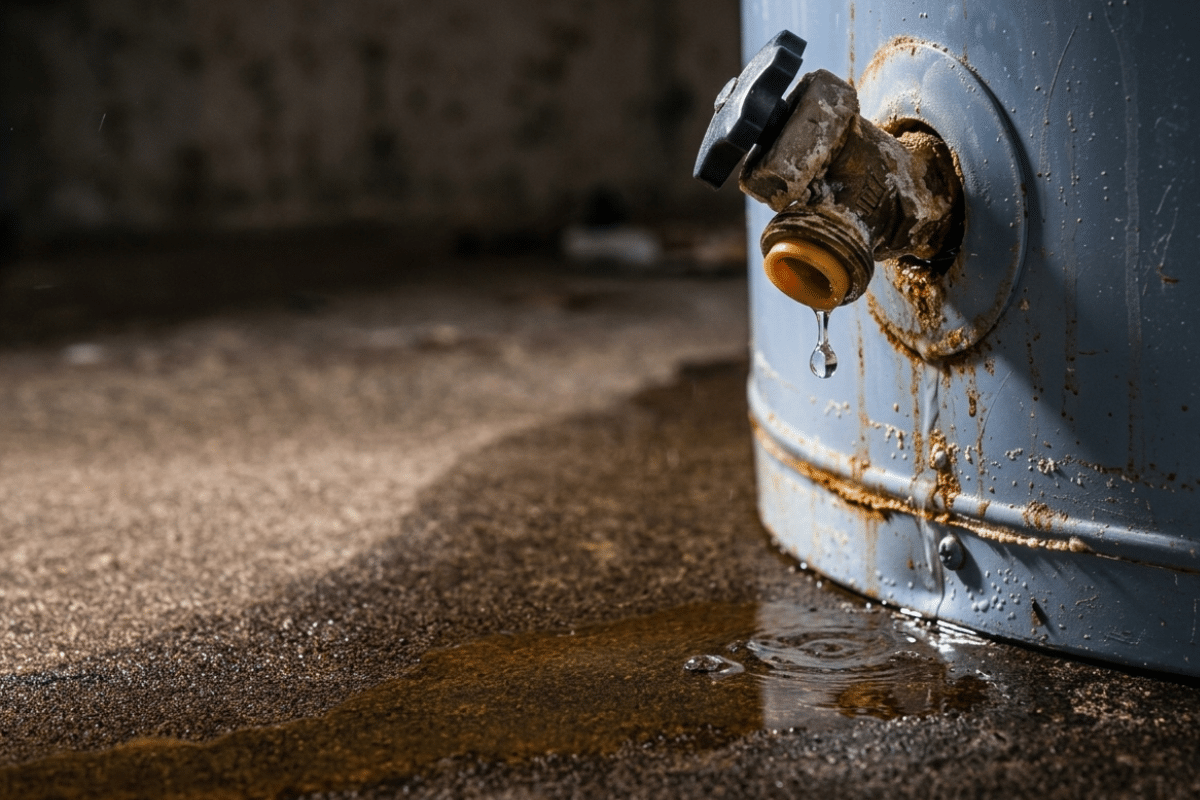
A puddle under your water heater is not something to ignore, even if it looks small. It could mean a loose valve or connection, an easy fix. It could also mean the tank itself is failing.
Turn off the unit and its water supply as soon as you can safely reach them. Then look for where the water actually starts. The puddle’s spot on the floor doesn’t always match where the leak begins; water can run down the side of the tank or down a discharge pipe before it ever reaches the ground.
What to Do Right Now
A leaking water heater mixes water, electricity, and sometimes gas in a small space, so treat it as urgent. Keep children and pets away from the area, and don’t touch the heater, an outlet, or any wiring if it’s wet.
Once you can reach the controls safely, take these steps:
- Cut the power. Turn off the electric water heater at the breaker. For a gas unit, follow the shutdown steps printed on the heater.
- Close the cold-water supply. The shutoff valve sits near the top of the tank. Closing it stops more water from feeding the leak.
- Stay away from wet electrical parts. Don’t remove covers or touch wiring, thermostats, or heating elements if the area is wet.
- Contain what you can. Towels or a bucket will limit the spread while you arrange an inspection.
- Leave immediately if you smell gas. Don’t flip switches or use a flame near the unit. Get outside and call the gas utility.
If the water is spreading fast or you can’t safely reach the shutoffs, stop and call a professional. Describe what you see without going back into the area.
Confirm Where the Water Is Coming From
A puddle at the bottom doesn’t always mean the tank itself has failed. Water follows gravity, so a leak higher on the unit can run down the outside and pool underneath it.
Once the heater is off, dry the outer surfaces with a towel and watch where moisture reappears first. Check the pipe connections at the top, the sides of the tank, the drain valve, the outer jacket, and the bottom seam.
Don’t open access panels or touch wiring while doing this. If finding the source means opening the unit, that’s a job for a professional.
What Causes a Water Heater to Leak From the Bottom
Six things typically cause this: a bad drain valve, a pressure relief system issue, a worn heating-element seal, a loose connection near the top, condensation, or corrosion inside the tank. Most of these are simple repairs. One of them means the tank needs to be replaced.
The Drain Valve
The drain valve sits near the bottom of the tank and is used to flush it. It leaks when it loosens, its seal wears out, or, on plastic valves, the plastic becomes brittle with age. A drip coming straight from this valve is a component problem, not a failed tank, and it’s usually repairable.
Don’t force it tighter; overtightening can crack the valve or damage the threads.
Is the Pressure Relief Valve Releasing Water?
The temperature and pressure relief valve sits near the top of the tank and opens if pressure or temperature inside gets too high. Its discharge pipe runs down toward the floor, so water from this valve can look like it’s coming from the bottom of the tank.
Repeated discharge points to a pressure or temperature problem and needs a professional to diagnose it. Never cap or block this valve to stop the water; it’s a safety device.
A Worn Heating-Element Seal
Electric water heaters have heating elements that pass through sealed openings in the tank. When a seal wears out, water leaks around the element and collects behind the access panel before it works its way down and out.
Switch off the power before anyone inspects this, and don’t open the panel or touch the element yourself unless you’re qualified. A worn seal is often repairable, but check the tank for corrosion around the opening first; a new gasket won’t fix a tank that’s already deteriorating underneath it.
Condensation
Sometimes the moisture isn’t a leak at all. Condensation forms when a cool surface meets warm, humid air, and it’s usually light and temporary. Dry the surface and see how fast it comes back. A steady drip or a puddle that keeps growing is a leak, not condensation.
A Loose Connection Near the Top
The cold-water inlet and hot-water outlet sit near the top of the tank. A loose or damaged fitting here lets water run down the outside and pool at the bottom. Look for mineral deposits, rust, or a wet trail leading down from the connection.
These leaks are usually repairable, but a corroded fitting needs careful handling so it doesn’t get worse.
Corrosion Inside the Tank
This is the one that can’t be fixed. Corrosion weakens the tank from the inside and eventually opens a hole or crack. Signs include water seeping through the tank body, rust around the bottom seam, discolored hot water, or popping and hissing sounds from sediment buildup. Once a tank is leaking from corrosion, it needs to be replaced; no repair restores a corroded steel tank.
Repair or Replace?
Whether a leak is fixable comes down to which of those six causes is responsible, not where the puddle sits on the floor. A loose connection, a bad drain valve, a worn heating-element gasket, or most relief-valve issues can usually be repaired without replacing the whole unit. Corrosion inside the tank cannot be repaired; a corroded, cracked, or perforated tank needs a new water heater.
Don’t use household sealant or a temporary patch on a leaking tank. And don’t assume a part swap will fix things until the actual source is confirmed: a new drain valve won’t stop an internal leak, and a new gasket won’t undo corrosion around it.
Age matters too. An older unit with extensive corrosion or a history of repairs is usually a better candidate for replacement than repair, even if the immediate leak looks minor; a plumbing company can confirm which situation you’re in.
Have your model number, serial number, and installation date ready; they help a technician judge the unit’s age and check whether it’s still under warranty.
Could Sediment Be the Reason?
Minerals in your water settle at the bottom of the tank over time and form a layer of sediment. This buildup traps heat against the tank floor, which stresses the metal, and it can also cause the popping or cracking sounds some leaking heaters make.
Flushing the tank helps manage loose sediment as regular maintenance, but it won’t undo damage that’s already there. Have an actively leaking heater inspected before you flush it, especially if it hasn’t been serviced in years.
How Urgent Is This?
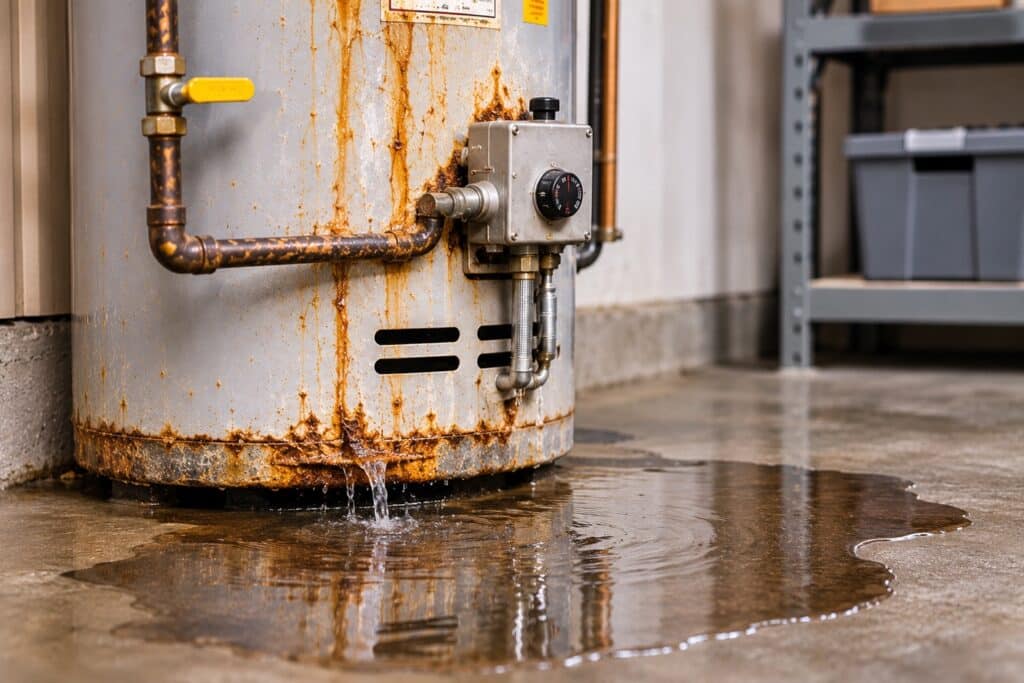
Treat a leaking water heater as urgent, not routine. Water near electrical components, a gas smell, steam, overheating, or unusual pressure sounds mean you should leave the area and call for help right away. Even a small leak can damage flooring and nearby materials if it goes unnoticed, and a slow drip can turn into a fast one without warning.
Keep the heater off until the source is identified. Running it while the cause is unknown risks losing more water or exposing damaged parts to more heat, pressure, gas, or electricity than they can handle. A plumber can tell you whether the unit is safe to run again after a repair, or whether it needs to be replaced first.
When to Call a Plumber
Call right away if water is spreading quickly, you can’t reach the shutoffs safely, or you smell gas. Repeated discharge from the relief valve, or any sign that water is coming through the tank body itself, also calls for a professional rather than a guess.
When you do call, have this ready: whether the heater runs on gas or electricity, its approximate age and model, where the water first appeared, how fast it’s spreading, and whether you’ve noticed rust, discolored water, or unusual sounds. These details help a technician prepare before they arrive.
Frequently Asked Questions
Why is my water heater leaking from the bottom?
The most common causes are a worn drain valve, the pressure relief valve, a heating-element seal, a loose connection near the top, condensation, or corrosion inside the tank.
Is this an emergency?
Treat it as urgent. It can get worse quickly, and water near electrical components, a gas smell, or unusual pressure sounds need immediate attention.
Should I turn off the heater?
Yes. Cut the power or gas and close the cold-water supply as soon as you can safely reach them.
Can I keep using hot water while it’s leaking?
No. Keep the heater off until the source is identified so the leak or damaged parts don’t get worse.
How do I tell whether it’s the drain valve or the tank itself?
Dry the outside and watch where moisture returns first. A drip from the valve itself is a component issue. Water coming through the tank body or bottom seam points to corrosion.
Can this be repaired?
Often, yes. A loose connection, drain valve, or heating-element gasket is usually fixable. A corroded or cracked tank is not.
Does a bottom leak always mean I need a new water heater?
No. It depends on the cause. Corrosion means replacement. Most other causes are repairable.
Can sediment cause a leak like this?
Yes, over time. Sediment traps heat against the tank and stresses the metal, which can contribute to a leak.
If you’ve noticed water collecting under your water heater, we can help you find out why. Plumbing Doctor has been diagnosing and repairing water heaters for over 40 years, and we give you the price before we start any work.
Explore our water heater repair service, or contact us to schedule an inspection. Searching for plumbers near me? We’re ready to help.
Contact us if you are looking for a reliable plumbing service in Chico, Davis, Dixon, East Bay, Elk Grove, Fairfield, Lincoln, Marysville, Oroville, Reno, Sacramento, West Sacramento, Sparks, Vacaville, Winters, Woodland, and Yuba City.