
There’s a moment every homeowner recognizes. You’re brushing your teeth, running a shower, or rinsing dishes… and suddenly the water just sits there, staring back at you. You jiggle the handle, poke the drain, mutter a few words we can’t print, still nothing.
That’s usually when the questions start: “Do I just need this one drain unclogged?” “Or is there something bigger going on in my pipes?” Sometimes, recurring or complex drain issues can be a sign of a problem within your home’s plumbing system, not just a single fixture.
If you’ve ever grabbed your phone and typed plumbers near me while staring at a clogged drain, you’re not alone. As a local plumbing company, we see this every single week.
And the thing that surprises most people is how big the difference is between a quick drain clearing and a full drain cleaning. They sound similar, but they solve very different problems, and they lead to very different long-term results.
In this guide, we’ll walk you through the difference between drain clearing vs drain cleaning in plain language. We’ll talk about when a simple, quick fix is enough, when you really need to clean the entire pipe, and how to avoid the same clog coming back again and again.
By the end, you’ll know how to choose the right service for your home instead of just hoping the problem “goes away.”
What Is Drain Clearing?
Let’s start with the quick fix everyone reaches for first. Drain clearing is all about one job: removing a specific blockage that’s stopping the water right now. It’s about getting the sink, tub, or toilet working again as fast as possible when one drain suddenly refuses to cooperate.
When we’re providing drain-clearing services, we’re not trying to wash the whole length of the drain pipes. We’re aiming right at the clog, like poking a hole through a plug so water can sneak past it.
The rest of the pipe walls can still have underlying buildup; we’re just dealing with the thing that’s in the way today.
Common drain clearing methods include:
- Plungers – That old-school tool still does solid work on many toilet and sink clogs.
- Handheld or powered snakes/augers – A flexible drain snake that can physically break through or hook clogs so we can pull them out.
- Basic chemical drain cleaners – Often used by homeowners, though we’re careful with these because they can damage older pipes and aren’t always the best answer.
We typically use drain clearing when:
- One sink suddenly slows or stops draining
- A tub fills up and just sits there after a shower
- A single clogged drain shows up, but the rest of the home seems fine
It’s a quick, reactive fix.
Think of drain clearing as taking painkillers for a headache, you feel better, and you can get on with your day.
But if you keep getting headaches, you eventually need to find the root cause.
Your drainage system works the same way.
What Is Drain Cleaning?
Now let’s talk about drain cleaning, which is a completely different thing.
Instead of just punching a small hole through one blockage, drain cleaning is about giving the inside of the pipe a deep clean.
We’re not just treating one spot, we’re treating the entire pipe or even the whole sewer and drain line. With professional drain cleaning, we’re targeting:
- Grease and oil stuck to the pipe walls
- Sludge, soap scum, and food scraps that have collected over time
- Tree roots that have invaded older sewer lines
- Mineral deposits and scale in homes with hard water
To do that properly, we use professional drain services and the right equipment, such as:
- Hydro jetting – High-pressure water delivered through a high-pressure hose that scrubs the inside of the pipe, blasting away grease, sludge, and even tree roots.
- Larger cable machines – Heavy-duty tools designed for main sewer lines and stubborn blockages.
- Camera or video inspection for drains – A small camera we feed into the line to see exactly what’s going on inside your plumbing system.
Camera inspection is a big part of modern drain cleaning services. It helps us spot cracked pipes, root intrusion, heavy grease, mineral deposits, or sections where the pipe has sagged. We can see what caused the recurring clogs and confirm the pipe is clean when we’re done.
Here’s the big idea:
- Drain clearing is about getting water flow back today.
- Drain cleaning is about getting the pipe itself back into good shape, and helping prevent future clogs.
If you’re tired of recurring slow drains or recurring blockages, cleaning is usually the long-term solution.
Key Differences: Drain Clearing vs Drain Cleaning
Even though the names sound similar, drain clearing vs drain cleaning behave very differently in real life.
Here’s a simple way to picture the key differences.
- Clearing is a spot fix at the specific blockage.
- Cleaning is a system fix for the whole pipe or even the main sewer lines.
Let’s break it down so it’s easy to compare.
| Question | Drain Clearing | Drain Cleaning |
| What it focuses on | One specific blockage or clog | The entire pipe or drain system |
| Typical tools | Plunger, basic snake/auger | Hydro jetting, larger machines, camera, or video inspection |
| Scope of work | Spot fix right at the clog | Full line wash to remove buildup, grease, and roots |
| How long do results usually last | Often a temporary solution, a clog may return | Longer-lasting, fewer recurring clogs |
| Ideal use case | One drain clog in an otherwise healthy plumbing system | Multiple fixtures, older pipes, heavy buildup or roots |
| Typical disruption | Quick visit, minimal equipment | More involved, more diagnostic work |
| Relative cost (directional) | Lower upfront cost | Higher upfront, but better long-term value |
Here’s the truth: if you only ever clear clogs, you can accidentally hide bigger issues.
You might get the tub draining again, but meanwhile, the main sewer lines are slowly closing up with grease, roots, or scale.
One day, instead of a slow drain, you wake up to standing water or foul odors coming from multiple fixtures.
That’s why we always look at the bigger picture. Sometimes a quick clear is all you need. Other times, it’s a short-term band-aid on clogged pipes that need full cleaning and possibly repair.
Common Causes of Clogs and Buildup
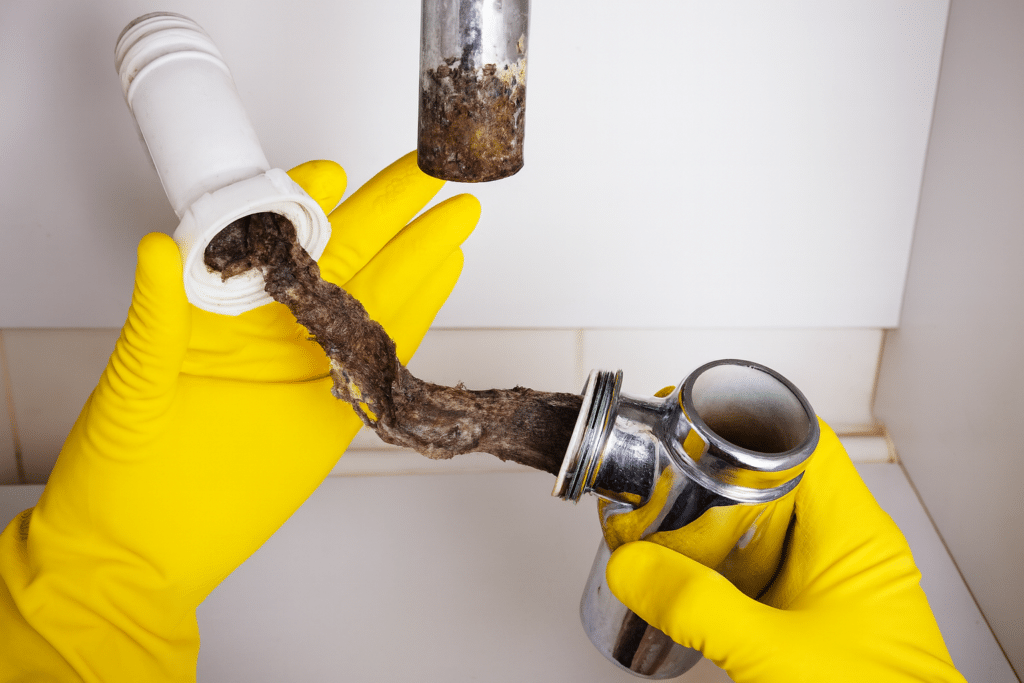
Clogs don’t usually happen out of nowhere. Most of the time, they’re the result of months, or even years, of little habits that slowly create an underlying buildup inside your drain pipes.
Understanding what’s causing the drainage issues helps us decide whether drain clearing or drain cleaning is the better move.
In kitchens, the usual suspects are:
- Grease and cooking oil poured down the sink
- Food scraps, coffee grounds, and thick sauces
- Starchy foods like rice and pasta
Grease goes in as a liquid, cools down, and hardens on the pipe walls.
Then food scraps stick to it, layer after layer, until there’s barely any space left for water to pass. A simple snake might punch through that mess, but the greasy coating remains.
In bathrooms, we mostly see:
- Hair (especially in showers and tubs)
- Soap scum and personal care products
- Too much toilet paper or items that should never be flushed
These form dense, tangled clogs that sit just below the drain. Sometimes clearing blockages near the fixture works fine; other times, there’s so much buildup down the line that the clog keeps coming back.
Then there’s the big underground problem: root causes inside sewer lines.
Tree roots find tiny cracks or joints in older pipes, push their way in, and grow into thick mats that trap everything passing by. No plunger in the world is going to solve that for long.
Hard water is another quiet troublemaker. Mineral deposits slowly narrow the pipe, leaving a rough surface that grabs onto grease and debris. Again, clearing can open a path, but cleaning is what actually restores flow and helps prevent clogs down the road.
In short:
- Soft clogs near a fixture might respond well to simple clearing.
- Built-up grease, roots, and heavy scale usually need full drain cleaning, often with hydro jetting.
When Do You Only Need Drain Clearing?
Not every drain issue is a sign of disaster. There are plenty of times when straightforward drain clearing services are exactly the right call.
The key is knowing what those times look like.
Drain clearing is usually enough when:
- The problem is clearly a one-off, like a dropped object or an unusual amount of hair or food at once.
- Only one drain is affected, and it has never been a “problem drain” before.
- The rest of the home’s plumbing system is working normally.
For example, if someone accidentally knocks a small toy into the toilet, clearing is perfect. Or if your kitchen sink clogs immediately after a big holiday dinner, a simple, quick fix might take care of it.
We still pay attention to the warning signs, though.
Clearing might not be enough if:
- The same drain clogs again soon after being cleared
- The snake pulls out a lot of grease, wipes, or tree roots
- You’ve had recurring clogs in that drain multiple times in a year
When that happens, your home’s plumbing system is basically raising its hand and saying, “Hey, there’s more going on down here.”
That’s when we start talking about full clearing and drain cleaning instead of just another temporary solution.
When Do You Need Full Drain Cleaning?
There are also times when we can tell right away that clearing won’t be enough.
These are the situations where the problem isn’t just in one small spot, it’s deep in the drainage system or main sewer line.
You’re likely in drain cleaning territory if:
- Multiple fixtures are backing up or draining slowly at the same time
- Toilets and tubs are acting up together
- You see water backing up in low drains when you use water elsewhere
Those are classic signs of a main line issue, not just a local clog.
You should also pay attention to:
- Sewer or foul odors in bathrooms, basements, or near floor drains
- Gurgling sounds from drains or toilets when other fixtures are used
- A pattern of slow drains throughout the home, not just in one room
Older pipes, clay pipes, and properties with lots of trees are especially prone to these issues. In those cases, we often recommend regular cleaning for main sewer lines as preventive maintenance.
A good general guideline:
- Many homes do well with annual drain cleaning or cleaning every 18–24 months.
- High-risk homes (older pipes, big trees, or a history of backups) may benefit from more frequent cleaning.
Full drain cleaning is less about putting out fires and more about preventing them.
Instead of waiting for the next messy backup, you stay in control and avoid bigger plumbing problems and future issues.
Tools and Techniques: Snaking vs Hydro Jetting
Two terms come up a lot when we talk about drain clearing vs drain cleaning: snaking and hydro jetting.
They’re both powerful tools, but they serve different purposes.
How Drain Snaking Works
Drain snaking uses a flexible metal cable that we feed into the pipe.
At the end, there’s a cutting head, hook, or coil that can physically break through or grab the clog.
Once the clog is broken apart or pulled out, water flow can start moving again.
Pros of snaking:
- Fast and relatively affordable
- Great for simple clogs close to the fixture
- Less equipment to set up, so it’s good for quick service calls
Cons of snaking:
- It usually cuts a path through the clog, but doesn’t wash the whole pipe
- Buildup stays on the pipe walls, so clogs can return
- It’s not ideal for heavy grease, thick sludge, or serious root problems
How Hydro Jetting Works
Hydro jetting is more like a pressure washer for the inside of your sewer lines.
We feed a special hose into the line, and high-pressure water sprays in multiple directions.
This scours the entire pipe, stripping away grease, sludge, scale, and even tree roots in many cases.
Pros of hydro jetting:
- Deep, thorough cleaning of the entire pipe
- Helps restore the original pipe diameter
- Excellent for older pipes, heavily used systems, recurring slow drains, and stubborn blockages
Limitations of hydro jetting:
- The pipe needs to be in good enough shape to handle the pressure
- We typically perform a camera or video inspection first to make sure it’s safe
- It’s more of an investment than a simple snake, but it offers longer-term results and can prevent future clogs
In many jobs, we’ll use both approaches. We might snake the line first to open enough space for water and the camera, then follow up with hydro jetting to fully remove the buildup. That way, you get immediate relief and a long-term solution.
DIY Drain Clearing vs Professional Help
We know a lot of people like to try DIY solutions before calling a plumber, and that’s completely understandable. There are safe ways to do that, and a point where it’s smarter (and cheaper in the long run) to bring in professional plumbers.
Safe DIY drain clearing usually includes:
- Using a good plunger on sinks, tubs, and toilets
- Trying a small, store-bought snake on nearby clogs
- Using mild enzyme-based products and hot water designed for maintenance, not heavy-duty chemical drain cleaners
These can work well for light clogs when the rest of the system is healthy.
They’re a reasonable first step if you’re comfortable doing a bit of hands-on work.
Where we get nervous is with repeated use of harsh chemical drain cleaners.
They can damage older pipes, accelerate pipe corrosion, harm finishes, and are rough on septic systems and the environment. And even when they seem to work, they often just drill a small passage through the clog instead of actually cleaning the pipe.
There’s also the mechanical risk. Forcing the wrong equipment into unknown pipes can crack or break them. If you’re straining and fighting the tool, that’s usually your cue to stop. As a simple guideline, it’s time to call a professional plumber or drain cleaning company when:
- The same drain keeps clogging again and again
- More than one fixture in the home is affected at once
- You notice foul odors, gurgling, or water backing up in low drains
- You suspect tree roots, broken pipes, or main line problems
Professional drain services come with more than just stronger tools.
We bring the right equipment, proper diagnosis, camera inspection, options like hydro jetting, and, if needed, trenchless sewer pipe replacement when the line is too damaged to save.
We can also walk you through trenchless sewer line replacement cost, and when trenchless sewer replacement makes more sense than repeated clearing.
If you’ve ever searched for trenchless sewer line replacement near me or wondered whether repair is better than constant cleaning, that’s exactly the kind of conversation we have with customers every week. The goal isn’t just to get you through today, it’s to stop the problem from owning your calendar.
Long-Term Maintenance: Keeping Drains Clean, Not Just Clear
If there’s one mindset shift that helps homeowners the most, it’s this: don’t wait for an emergency to think about your drains. A little plumbing maintenance is much cheaper, and far less stressful, than surprise backups.
Here are some simple habits that make a big difference:
- Use drain screens in showers and sinks to catch hair and food
- Avoid pouring grease down the sink, and wipe greasy pans with a paper towel first
- Keep wipes, hygiene products, and paper towels out of toilets, even if they’re labeled “flushable.”
- Don’t overload the system with large amounts of coffee grounds or starchy foods
On top of those habits, consider regular cleaning and periodic drain cleaning services, especially if:
- You live in an older home with older pipes
- You have a lot of trees near your sewer lines
- You’ve had more than one serious clog or backup in recent years
For many homes, annual drain cleaning or a main sewer line cleaning every 18–24 months is a good starting point. For “problem homes,” once a year can save you from those awful surprise backups and future issues. We can help you design a preventive plan that fits your plumbing needs and budget.
The payoff is simple:
- Fewer emergencies
- Fewer after-hours calls
- Better water flow throughout the home
- A healthier plumbing system that lasts longer
Your drains will never send you a thank-you card.
But they will stay quiet, problem-free, and out of your way, and that’s exactly how they should be.
Benefits of Annual Drain Cleaning
It’s easy to forget about your drains when everything seems to be working fine. But just like changing the oil in your car or cleaning out your gutters, annual drain cleaning is one of those behind-the-scenes tasks that pays off big time in the long run.
Scheduling regular drain cleaning services isn’t just about avoiding the hassle of a clogged drain, it’s about keeping your entire plumbing system in top shape. When you invest in annual drain cleaning, you’re taking a proactive step to prevent future clogs, reduce the risk of messy backups, and keep your pipes running smoothly year-round.
Here’s why annual drain cleaning should be part of your plumbing maintenance routine:
- Prevent Future Clogs: Over time, grease, soap scum, food particles, and other debris naturally build up on your pipe walls. Annual cleaning services remove this buildup before it can turn into a stubborn blockage, helping you avoid those surprise slow drains and standing water.
- Reduce Plumbing Emergencies: Nothing ruins your day like an unexpected backup or overflow. By keeping your drains clear, you dramatically lower the chances of emergency calls and water damage in your home or business.
- Maintain a Healthy Plumbing System: Regular cleaning helps protect your pipes from corrosion, foul odors, and the wear-and-tear that comes from recurring clogs. A healthy plumbing system means better water flow, fewer repairs, and a longer lifespan for your pipes.
- Save Money Over Time: Preventive cleaning services are far less expensive than emergency repairs or major pipe replacements. By catching small issues early, you avoid the higher costs that come with neglected plumbing.
- Peace of Mind: Knowing your drains are professionally cleaned each year means one less thing to worry about. You can trust that your home’s plumbing system is ready to handle whatever you throw at it, literally.
In short, annual drain cleaning is a simple, cost-effective way to prevent future clogs and keep your plumbing system healthy. If you want to avoid the stress and expense of unexpected plumbing problems, make regular cleaning services a part of your yearly home maintenance plan. Your pipes, and your wallet, will thank you.
How Plumbing Doctor Handles Drain Clearing and Cleaning
So where do we come in?
At Plumbing Doctor, we help homeowners and businesses with both emergency drain services and full drain cleaning services. Our goal is simple: get things flowing again and help keep them that way.
When you call us for immediate assistance with a drain problem, we start with questions and an inspection. We look at which fixtures are affected, how long it’s been going on, and whether this is a first-time issue or part of a pattern of recurring slow drains.
If it makes sense, we’ll use a video inspection to see what’s happening inside the main line.
From there, we’ll explain exactly what we’re seeing and what your options are.
That might mean:
- A quick drain clearing to take care of a one-off clog
- A full drain cleaning with cable machines or hydro jetting
- A camera inspection and cleaning combo for recurring drainage issues
- Repair options, including trenchless sewer pipe replacement, if the line is damaged
We always walk you through both the “fix it fast” option and the “fix it for the long term” option. You decide what’s right for your home, your timeline, and your budget.
We’ve spent decades helping our local communities with everything from slow drains and standing water to full main line blockages. We know how stressful plumbing problems can be, especially when you’re worried about damage or a mess.
That’s why we focus on clear communication, honest recommendations, and doing the job right the first time. If you’re in the area and have been searching for drain cleaning plumbers near me, or professional drain cleaning companies you can trust, we’re here to help.
Reach out to the Plumbing Doctor, and we’ll help you figure out the difference between drain clearing and cleaning for your specific situation, then get your home or business flowing smoothly again.
FAQs: Drain Clearing vs Drain Cleaning
What’s the difference between drain clearing and drain cleaning?
Drain clearing removes the immediate blockage so water can start flowing again, usually with tools like plungers or a drain snake. Drain cleaning goes further and washes the inside of the pipe, removing blockages, grease, sludge, roots, and buildup along the line.
Clearing is a short-term fix for one spot; cleaning is a deeper solution for the whole pipe and helps prevent buildup and future clogs.
How do I know if I need full drain cleaning instead of just clearing a clog?
If one drain clogs for the first time and everything else works fine, clearing may be enough. If multiple fixtures are slow or backing up, the same drain keeps clogging, you smell sewer odors, or you hear gurgling in drains or toilets, that points towards a main line issue.
Those are strong signs you need full drain cleaning and possibly a camera inspection to check the condition of your drainage system.
Why do my drains keep clogging even after they’ve been cleared?
Clearing usually opens a path through the clog but leaves buildup on the pipe walls.
That leftover grease, soap, and debris keep grabbing new material, so the clog comes back in the same spot.
Drain cleaning, especially with hydro jetting, removes that buildup and gives you longer-lasting results. In some cases, we may recommend repair or trenchless sewer replacement if the pipe is too damaged.
What drain clearing and cleaning services does Plumbing Doctor offer?
We offer emergency drain clearing, professional drain cleaning for main sewer lines, hydro jetting for heavy buildup and roots, and camera inspection for drains.
We also provide repair options, including trenchless sewer line replacement when needed, and can explain trenchless sewer line replacement cost and benefits.
If you want fewer surprises, smoother drains, and a healthy plumbing system, we can also help set up a preventive plumbing maintenance plan for your home or business.
Conclusion: Choosing the Right Fix for Your Drains
At the end of the day, the real question isn’t just “how do I get this clog to go away?” It’s “how do I stop this from becoming a regular guest in my home?” Understanding the difference between drain clearing and drain cleaning is the first step toward answering that.
Clearing is perfect when you’re dealing with a simple, isolated clog and you just need a quick way to get back to normal. Cleaning is the smarter move when you’re seeing patterns, recurring clogs, slow drains in multiple fixtures, foul odors, or signs of trouble in the main line.
One is about getting through today; the other is about protecting your home’s plumbing system for the long haul.
You don’t have to diagnose it all yourself, though. That’s what we’re here for. Whether you’re staring at standing water, chasing a mystery smell, or just tired of the same drain acting up over and over again, we can walk you through the options, show you what’s happening in your pipes, and match you with the right service for your home.
If you’re in our service area and your drains are trying to tell you something, reach out to the Plumbing Doctor. We’ll help you decide whether you need a simple, clear, deep clean, or a more permanent repair, and get your drains and your day flowing smoothly again.Contact us if you are looking for a reliable plumbing service in Chico, Davis, Dixon, East Bay, Elk Grove, Fairfield, Lincoln, Marysville, Oroville, Reno, Sacramento, West Sacramento, Sparks, Vacaville, Winters, Woodland and Yuba City.