
If you’ve ever faced a sewer line problem, you know it’s not just about fixing a pipe, it’s about protecting your home, your yard, and your peace of mind.
Traditional methods often involve tearing through landscaping, concrete, or even parts of your house, requiring large scale excavation for sewer line replacement that can cause significant disruption to your property and the environment.
That’s where trenchless sewer repair comes in, offering a less invasive process that many homeowners now prefer.
But is trenchless sewer replacement right for my property, especially if I have a damaged sewer line? That’s the question we hear the most. And the answer depends on a few key factors.
Let’s walk through what trenchless sewer repair really means, when it works best, and how to tell if it’s the right fit for your home.
What Is Trenchless Sewer Repair?
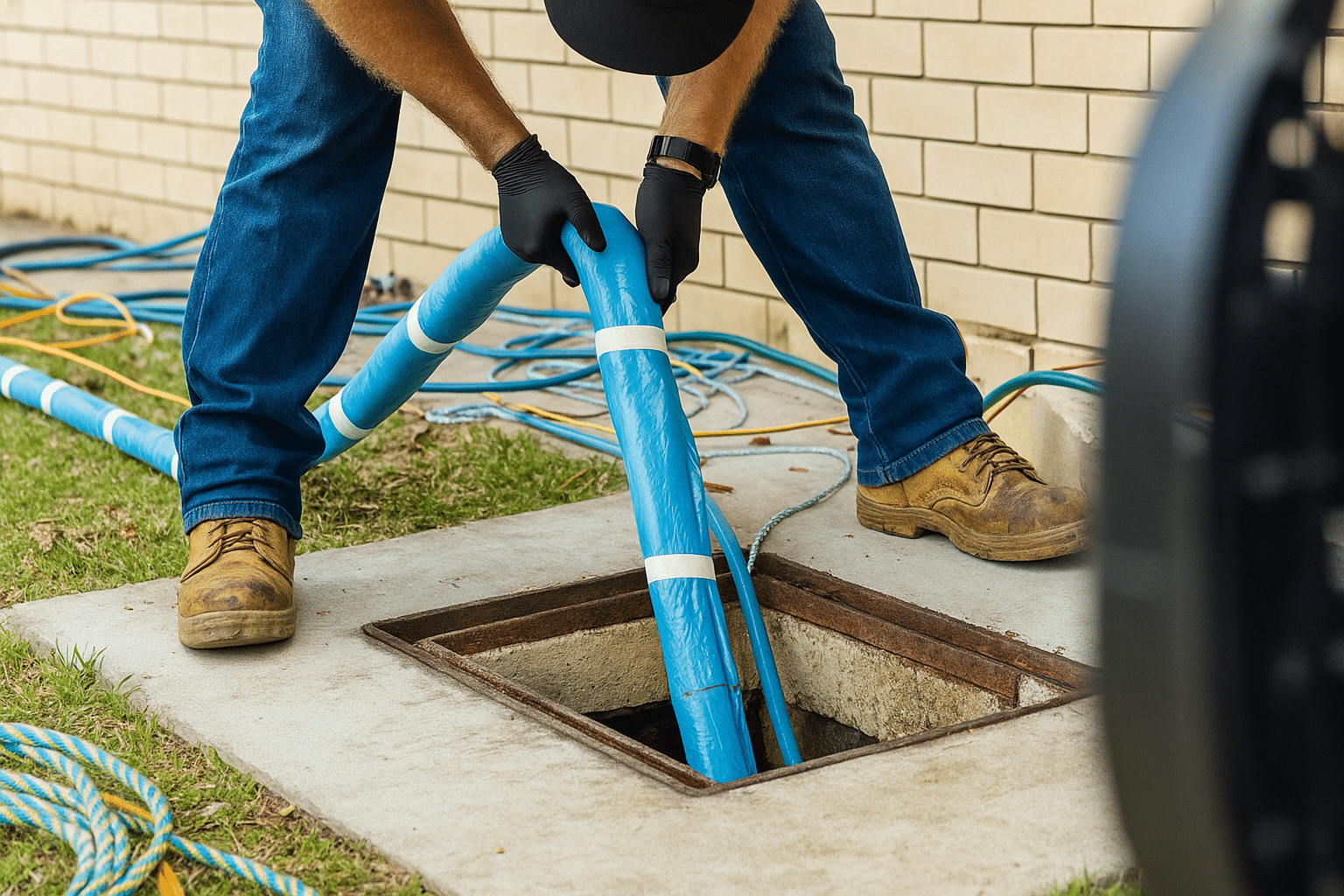
Trenchless sewer line repair uses advanced techniques to fix or replace underground pipes while ensuring minimal disruption without extensive excavation.
Instead of digging a trench along the entire line, we use small access points to reach the existing sewer line. Typically, trenchless methods require only a couple of access points, minimizing disruption.
There are two main trenchless sewer repair methods:
- Pipe bursting involves pulling a new pipe through the old pipe. As the new line moves in, it breaks apart the damaged pipe and replaces it simultaneously.
- Pipe lining (also called cured in place pipe) is a method where a flexible, resin coated liner is inserted into the old sewer pipe and then hardened in place. It creates a smooth, joint-free pipe inside the existing pipe.
Both approaches require specialized equipment but result in minimal disruption to your yard. They’re ideal when you want to avoid extensive digging and expensive restoration costs.
Sewer Systems and Maintenance: The Basics Homeowners Should Know
Your home’s sewer system, which may include old sewer lines, is the unsung hero of your plumbing, quietly carrying wastewater away and keeping your property safe and sanitary. But like any hardworking system, it needs a little attention to keep running smoothly.
Regular maintenance of your sewer lines is essential to prevent unexpected sewer line damage and costly repairs down the road.
Start by being alert to the warning signs: slow drains, persistent foul odors, or unexplained water damage can all point to issues within your sewer lines.
Scheduling routine inspections can help catch small problems, like minor cracks or early blockages, before they escalate into major sewer line repairs or even full sewer line replacement.
Simple steps, such as avoiding flushing non-degradable items and keeping tree roots in check, can also help extend the life of your sewer system. By staying proactive with maintenance and addressing sewer line repairs promptly, you’ll protect your investment and avoid the stress of emergency repairs.
What Makes a Property Ideal for Trenchless Repair?
If you’re wondering whether your home is a good candidate for trenchless sewer line pipe repair, consider these property features:
Access Points
To perform trenchless repair, we need to reach both ends of the sewer line. Most homes already have these access points, but if not, we may need to create them, especially if there is a damaged pipe still far less invasive than traditional excavation.
Pipe Condition
Trenchless methods work best when the old sewer lines aren’t fully collapsed. If there’s sewer line damage but the existing pipe still holds its shape, lining or bursting can be used. Completely collapsed lines often require traditional pipe replacement. Older pipes are more likely to have deterioration or damage that could affect the suitability of trenchless methods.
Room for Equipment
While trenchless methods avoid large trenches, they still require specialized equipment. We need enough space in the yard to set up the specialized equipment and operate safely.
Soil Quality and Pipe Materials
The condition of the soil and type of old pipe matter. Loose or rocky soil, or severely deteriorated materials like cast iron or Orangeburg, may complicate trenchless sewer line repair. Older pipes are especially prone to material deterioration, which can impact repair options.
Absence of Severe Root Intrusion or Bellies
Tree roots can sometimes be cleared before repair, but extensive damage or large bellies in the pipe may limit trenchless options.
When Trenchless Sewer Repair May Not Be Right
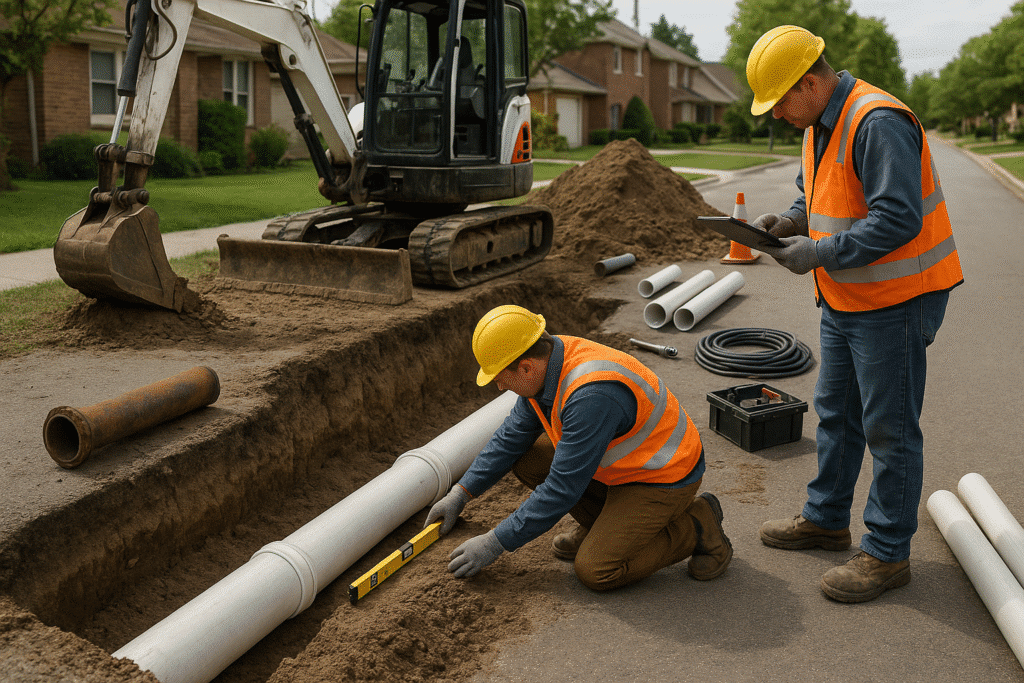
Although trenchless technology is impressive, it isn’t suitable for every situation. Here’s when traditional sewer repair may still be necessary:
Collapsed Sewer Pipe
If the existing sewer line has caved in entirely, there’s no path for a liner or bursting head. In these cases, if the sewer line is severely damaged, a damaged sewer line may require complete replacement through traditional excavation when trenchless methods cannot be used.
Utility Interference
In areas where utility lines are densely packed or shallow, trenchless repair methods might risk disturbing other services. Traditional repair provides more control in these setups.
Limited Equipment Access
Urban homes with narrow yards or homes with tight access might not offer enough space for the equipment used in trenchless pipe repair.
Historic or Regulated Properties
Some neighborhoods have rules that limit the use of trenchless methods or require specific restoration efforts after repairs.
Comparing Trenchless and Traditional Sewer Repair
Let’s break down the pros and cons of trenchless vs traditional sewer repair to help you weigh the decision. Here’s a cost comparison between trenchless repairs and traditional repairs to help you understand the differences in expenses and value.
Cost and Labor
Trenchless repair can have a higher upfront cost due to the specialized equipment and expertise it requires. However, it’s often more cost effective overall because you avoid repairing landscaping, sidewalks, or driveways. Labor costs are also lower due to faster installation.
- Cons of trenchless sewer: Higher initial costs and may not be suitable for all types of sewer repairs or pipe conditions.
Time to Completion
Trenchless sewer repair usually takes a day or two, compared to several days with traditional excavation.
Disruption
Traditional sewer repair involves digging up large portions of your property. Trenchless repair, by contrast, uses minimal digging and results in much less surface damage.
Durability and Materials
Trenchless sewer repair pros include the use of modern, durable materials that resist corrosion and root intrusion, offering greater longevity than older sewer pipes.
Trenchless repairs often use high density polyethylene for new pipes, which is more resilient and long-lasting than materials found in older sewer pipes. Pipe lining methods are also highly effective at sealing cracks in existing sewer pipes, restoring structural integrity without excavation.
Whether it’s a new pipe from pipe bursting or a cured in place pipe lining, both are designed to last 50 years or more.
Feasibility
Not every plumbing system qualifies for trenchless. If the damage is too extensive or the pipe materials are unsuitable, traditional methods may be necessary.
Understanding Labor Costs: What to Expect
When it comes to sewer repair, labor costs can make up a significant portion of your total bill and the method you choose plays a big role in what you’ll pay. Traditional excavation methods, which involve extensive excavation of digging up the entire sewer line, are typically more labor-intensive.
This means higher labor costs, especially if your sewer line runs under driveways, patios, or landscaping that needs to be restored afterward.
Trenchless sewer repair methods, such as pipe bursting and CIPP lining, use specialized equipment and require skilled technicians, but they often need less manual labor overall. Because trenchless methods avoid extensive digging, the process is faster and less disruptive, which can translate to lower labor costs despite the advanced technology involved.
On average, traditional excavation can range from $50 to $200 per foot, depending on the complexity of the job and the amount of digging required.
Trenchless sewer repair methods like pipe bursting or CIPP lining may cost between $80 and $250 per foot, but the reduced labor and quicker turnaround can make them a cost-effective choice for many homeowners.
Understanding these differences can help you budget for your sewer repair and choose the repair method that best fits your needs.
Time Efficiency: How Fast Is Trenchless Repair?
If you’re looking to get your sewer system back in action with minimal downtime, trenchless sewer repair is hard to beat. Unlike traditional excavation, which can stretch on for days or even weeks due to the need for extensive digging and restoration, trenchless sewer repair methods are designed for speed and efficiency.
Techniques like pipe bursting and CIPP lining can often be completed in just a few hours or a couple of days, depending on the length and condition of your sewer line. Because these trenchless methods use only small access points and specialized equipment, there’s no need to wait for large trenches to be dug and refilled. This means less disruption to your daily routine and a faster return to normal.
For homeowners who value quick, effective solutions, trenchless sewer repair methods offer a clear advantage, getting your sewer system up and running with minimal hassle and downtime.
Environmental Impact: The Greener Choice?
Choosing a sewer repair method isn’t just about convenience and cost, it’s also about the impact on your property and the environment, including the cons of trenchless sewer methods.
Trenchless sewer repair methods are often considered the greener choice compared to traditional excavation. By minimizing the need for large-scale digging, trenchless sewer repair helps preserve your landscaping, reduces soil erosion, and keeps local ecosystems intact.
Traditional methods can generate significant waste, including piles of soil and debris that need to be hauled away. In contrast, trenchless methods like pipe bursting and CIPP lining create far less mess, helping to reduce the overall environmental footprint of your sewer repair project.
If sustainability is important to you, trenchless sewer repair methods offer a more eco-friendly way to restore your sewer system, protecting both your property and the planet.
Long-Term Durability: How Will It Hold Up?
When investing in sewer repair, you want a solution that stands the test of time. Trenchless sewer repair methods are designed with long-term durability in mind. Whether you choose pipe bursting or CIPP lining, these techniques create a new pipe within your existing pipe or replace it entirely, using materials engineered to resist corrosion, root intrusion, and everyday wear.
A properly installed trenchless sewer line can last 50 years or more, giving you peace of mind that your sewer system will remain reliable for decades. In contrast, traditional excavation methods may use materials that are more susceptible to damage from shifting soil or environmental factors, potentially leading to more frequent repairs or replacements.
By opting for trenchless sewer repair methods, you’re choosing a solution that not only fixes your current problem but also helps prevent future issues, ensuring your sewer system remains strong and dependable for years to come.
How to Know for Sure: Get a Professional Inspection
Before choosing any sewer repair method, a video inspection is key. We use a small camera to inspect the inside of the sewer line, check for cracks, blockages, or a collapsed section, and identify the pipe materials. This process helps identify sewer line problems and determine the most effective repair method.
This inspection also helps determine:
- Whether trenchless methods are possible
- The condition of the existing pipe
- The best repair options based on soil quality and layout
A professional inspection ensures the repair method chosen is both safe and cost effective.
Real Homes, Real Solutions
Case: Backyard Garden Saved
One homeowner in Vacaville had sewer line damage running under their prized backyard garden. Rather than destroy it with traditional excavation, we used pipe lining through small access points. The cured in place pipe hardened within hours, and the garden remained untouched.
Case: Driveway Trouble
Another recent client had a fully collapsed sewer pipe under a concrete driveway. A trenchless method wasn’t possible. Instead, we performed a targeted traditional replacement, limiting the driveway’s damage and reducing restoration costs.
Each property tells a different story. That’s why no solution is one size fits all.
Common Questions from Homeowners
How do I know if trenchless sewer replacement is right for my property?
A video inspection by a licensed plumber is the only way to confirm whether trenchless sewer repair is possible.
Will trenchless methods damage my landscaping?
Very little. Most projects involve small access points and minimal digging, so your landscaping remains mostly undisturbed.
What if my old pipe is severely damaged?
If the sewer pipe is fully collapsed or has extensive damage, traditional pipe replacement may be the only option.
Is trenchless sewer line repair really long lasting?
Yes. A new pipe installed using trenchless repair methods is designed to last decades and resist corrosion and root damage.
Your Next Step: Book a Professional Inspection
When facing sewer line repairs, it’s easy to feel overwhelmed. But understanding your repair options can help you move forward with confidence. Whether you need trenchless sewer line repair or traditional excavation, our team is here to guide you.
Plumbing Doctor has helped thousands of homeowners for over 40+ years determine the best solution for their plumbing systems. With the right inspection and an honest conversation about your options, we’ll help you choose the method that makes the most sense for your home.
Don’t wait for a small issue to become a major problem. Schedule your professional sewer inspection with Plumbing Doctor in Vacaville, CA, today to find out if trenchless sewer replacement is right for your property.
To learn more about trenchless technology and our sewer repair services, visit our Trenchless Sewer Replacement page.
Contact us if you are looking for a reliable plumbing service in Vacaville, Davis, Dixon, East Bay, Elk Grove, Fairfield, Marysville, Reno, Sacramento, West Sacramento, Sparks, Winters, Woodland, and Yuba City.