

The first sign is usually small. A lazy drain, a random toilet gurgle, or a whiff of something that definitely isn’t a new candle scent drifting up from the yard. Most homeowners shrug and think, “I’ll deal with it later,” right up until the day sewage backs up into the house and everything turns urgent.
At that moment, nobody was Googling “local regulations” or “sewer line permit.” You’re searching for plumbers near me, trying to find a plumbing company that can get to your house fast and stop the chaos.
But here’s the part most people don’t hear about until it’s too late: when you’re talking about sewer line repair, permits required for sewer repair aren’t a suggestion, they’re part of the job. In many areas, a building permit is also required for sewer repair, not just a plumbing permit.
Done right, a sewer repair is a one-time plumbing project that gets inspected, signed off, and quietly filed away under your permit number.
Done wrong, or done without the right plumbing permit, it can come back during a sale, an insurance claim, or when the city decides to look into work near the public right of way. So let’s walk through how permits, sewer line replacement, and real-world plumbing work actually fit together, in plain language.
Why Sewer Repairs Even Need a Permit
It helps to remember what your sewer line really is. It’s not just a random pipe in the yard; it’s the private path that connects the plumbing systems inside your house to the public sewer under the street.
Because that sewer connection ties your private property directly into city infrastructure, local building codes treat most sewer work as work on critical public systems, not just a backyard project.
If sewer pipes crack, collapse, or pull apart, sewage doesn’t politely stay inside your property line. It can leak into soil, cause foundation problems, damage drain lines, and even migrate toward neighboring homes or a sewer easement.
That’s why most counties write regulations that require a permit for major sewer repairs and why they send a county inspector or city inspector to check the work. In some cases, an excavation permit may also be required if the repair involves significant digging.
Permits aren’t just red tape invented by a bored building department. They’re how local building officials make sure plumbing work requires proper materials, slope, and installation methods that comply with modern regulations.
A sewer line made of old clay or cast iron that was “fine” decades ago may not meet today’s local rules, especially in areas with strict environmental protections.
So even though the main sewer line is buried out of sight, it’s never out of mind for your city. Permits exist to protect the public sewer system, safeguard groundwater, and protect you as a property owner from unsafe work.
Handled right, the permit process is simply a checklist that keeps your plumbing project safe, legal, and documented.
When a Sewer Repair Permit Is Definitely Required
Here’s a simple rule: if you’re doing more than clearing a clog, you probably need a permit.
In California, Nevada, and most counties across the U.S., obtaining permits is required for any substantial sewer work outside the walls of the house.
That especially applies once you cross the property line and get close to the street or public right. If the job requires digging in the street, sidewalk, alley, or public right of way, expect extra layers of paperwork.
The city may require a separate right of way permit, traffic-control plans, or approval from public works before the contractor can open pavement. A utility permit may also be necessary when the work impacts public utility lines.
Jobs That Almost Always Require a Permit
These are the types of sewer repairs that nearly always require a permit and sometimes a right of way permit too:
- Full sewer line replacement from the house to the public sewer connection
- Major spot sewer line repair where a section of pipe is cut out and a new pipe is installed
- Rerouting the line to a different location on the property
- Changing pipe size or material, like upgrading old cast iron or clay to PVC or HDPE
- Any sewer replacement that changes slope, depth, or alignment of the line
- Work that extends into public property or right of way, which may require an encroachment permit.
If the job requires digging in the street, sidewalk, alley, or public right of way, expect extra layers of paperwork. The city may require a separate right of way permit, traffic-control plans, or approval from public works before the contractor can open pavement. You’re no longer just on private property at that point, you’re in a shared space where the rules are tighter and inspections are stricter.
Multi-family buildings, rentals, and commercial locations are usually held to even higher standards. Their plumbing work can impact more people, so sewer line replacement permit requirements can get more detailed. If you’re a landlord or managing a building, it’s especially important to contact a licensed plumbing contractor who understands local regulations before starting sewer work.
When a Permit Might Not Be Required
The good news is not every plumbing project needs a full permit package. Smaller jobs inside the home, like replacing a P-trap or fixing a single drain line under a sink, often fall into the “minor work” category. But every city writes its own local building codes, so what’s minor in one location may require a permit in another.
Minor repair jobs, such as those that do not involve altering the main sewer line or significant excavation, often do not require a permit.
Work that may not need a plumbing permit can include:
- Basic drain cleaning or hydro jetting on existing drain lines
- Stopping a small leak without replacing pipe sections
- Certain interior fixture repairs and maintenance that don’t change the plumbing system layout
If you call for Drain cleaning Vacaville or a quick snaking of a kitchen line, the contractor probably won’t need a permit number to do that work. But as soon as they cut out a section of sewer pipe, excavate the yard, or touch the main sewer line, the rules change. That’s the point where a licensed plumber will usually tell you, “We need a permit for this job.”
Our standing advice to homeowners is simple: don’t guess. A five-minute call to your local building department or a professional plumber you trust is all it takes to find out whether you need a permit. That quick step can protect you from fines, failed inspections, or being forced to expose finished work later.
Who Is Responsible for the Sewer Line Permit?
This is where things surprise a lot of homeowners. Even if a contractor handles all the paperwork, the city still looks at the property owner as the person ultimately responsible for the plumbing work on that house. If something doesn’t comply with local regulations, the notice doesn’t go to the trench, it goes to the mailbox.
In practice, though, you’re not expected to navigate the permit process alone. A licensed plumbing contractor or licensed plumber will usually pull the sewer line permit on your behalf, submit plans, and schedule inspections.
The contractor will also complete and submit the permit application to the city. You sign off as the property owner, but the contractor handles the logistics, coordinates with local building staff, and makes sure the permit is associated with the right address and project.
At a company like Plumbing Doctor, we build permit handling into the way we operate. We treat obtaining permits, scheduling inspections, and working with public works as part of the sewer work itself, not an optional add-on. You get one location for answers: us, not a maze of city phone extensions and voicemail boxes.
Local Building Department: Where Permits Start
When it comes to getting a sewer line permit, your local building department is the first stop on the journey. This is the office responsible for reviewing and approving all sewer line replacement projects in your area.
As a property owner, you’ll need to submit a permit application that details the scope of your sewer line work, everything from the location of the line to the type of pipes you plan to use and the installation method.
The local building department will check your plans to make sure they comply with local building codes and regulations, ensuring your project won’t cause problems for the public sewer system or neighboring properties.
Because local regulations can vary widely, it’s essential to contact your local building department before starting any sewer project. They’ll let you know exactly what’s required for a sewer line replacement permit in your city or county. A licensed plumber or contractor can be a huge help here, guiding you through the permit process, preparing the necessary documentation, and making sure your project meets all local requirements. By starting with the local building department, you set your sewer line project up for success and avoid costly surprises down the road.
What the Sewer Repair Permit Process Really Looks Like
Now let’s walk through what actually happens, step by step.
We’ll stick to plain English, not code-book language.
If you ever have to replace a sewer line, this is the story you’ll be living through. The inspection process is an essential part of ensuring the work meets all code and safety requirements.
1. Inspection and Diagnosis
Everything starts with figuring out what’s going wrong underground.
We typically run a camera through the sewer line and record video of the sewer pipes from the house out toward the connection in the street.
This is where we spot issues like tree roots, broken joints, bellies in the line, or complete collapse.
Sometimes, especially near a sewer easement or older public sewer systems, we’ll perform a dye test to confirm where sewage is actually flowing.
If the video shows damage that can’t be solved by basic maintenance, we’ll talk about whether sewer line repair or full sewer line replacement makes more sense.
That camera footage often becomes part of the documentation that backs up the need to get a permit.
2. Choosing the Type of Repair
Once we know what’s wrong, we talk through your options as homeowners.
Depending on what we find, we may recommend:
- A targeted repair on one section of pipe
- A new sewer line to replace old, failing materials
- Trenchless sewer pipe replacement or other trenchless methods if the conditions are right
For many people, trenchless sewer replacement is appealing because the yard, driveway, or landscaping doesn’t have to be fully torn up.
We’ll walk through trenchless sewer line replacement costs compared to open-trench work so you understand the trade-offs.
Whether you found us directly or by searching for something like trenchless sewer line replacement near me, our goal is to explain the options clearly so you can decide what’s best for your property and budget.
3. Applying for the Permit
Once the scope is set, it’s time to get a permit. We fill out the application for the sewer line replacement permit or plumbing permit, including information about the project, the contractor license, and the location.
The city uses that to estimate cost, confirm the type of plumbing work involved, and make sure the plan doesn’t conflict with any public right of way requirements.
Sometimes plans or simple sketches are required, especially near a sewer easement, street, or public right.
In some jurisdictions, certain types of sewer work or water heater jobs are pre-approved with standard details that contractors can use.
Either way, the goal is the same: the city wants to protect the plumbing system and the public sewer from careless work.
4. Doing the Work
Once we get a permit number and the green light, we mobilize the crew.
We excavate or set up for trenchless sewer replacement depending on the plan, then install the new pipe with the right slope and connections.
If we’re dealing with older cast iron lines or badly damaged clay line, we may recommend replacing more instead of patching small pieces.
During the job, we keep an eye on anything that could affect the building structure, nearby utilities, and future maintenance.
If the project crosses into a public right of way, we follow any extra safety rules, traffic control plans, or inspection steps laid out in the right of way permit.
Throughout the job, our focus is to protect your property, protect the system, and comply with the local rules that apply at that location.
5. Inspections and Final Sign-Off
Before anything is fully buried, the city will want eyes on the work. That’s when we schedule inspections with the local building department or county inspector, depending on jurisdiction.
They may check depth, slope, bedding, material type, and how the sewer connection ties into the public sewer.
If everything checks out, the inspector signs off and we can backfill, compact, and restore the surface.
Once the inspections are complete, the city closes the permit in its system and the project is officially wrapped.
You’re left with a repaired or replaced sewer line, documented plumbing work, and proof that you did everything by the book.
How Long Do Sewer Repair Permits Take?
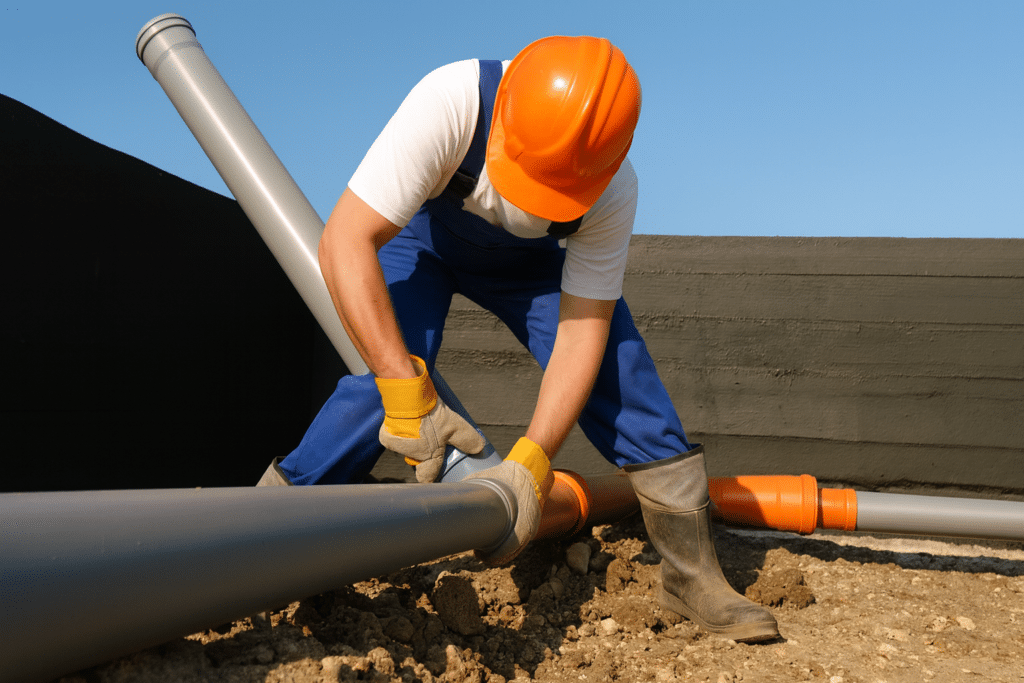
Everyone wants to know how fast they can get a permit and start the repair. For simple residential sewer line permits, some cities can turn them around the same day or within a few business days.
More complex projects, especially those in the street, can take longer.
Delays usually come from three places. First, a busy city office can slow any permit process down. Second, incomplete applications make the staff stop and contact the contractor for more details, which adds time.
Third, any work in or near the street, a public right of way, or a shared sewer easement can trigger extra review by public works.
That’s where having a contractor who often works in that city really helps.
We already know which plumbing work requires more detail and how to get a permit without a lot of back-and-forth.
What About Emergencies, Can You Start Without a Permit?
Sewer line failures aren’t known for their good timing. They show up on weekends, holidays, or right before guests come over, and suddenly the house doesn’t feel safe or sanitary.
In those moments, you’re not calmly planning a project, you’re trying to stop sewage from coming up in tubs and showers.
Many cities understand this and allow emergency work to begin before the paperwork catches up. In true health-and-safety situations, a professional plumber can often start stabilizing the problem right away and then get a permit as soon as the immediate crisis is under control.
The key is that the work still has to comply with local building codes and pass inspections.
So no, an emergency doesn’t erase the need to get a permit. It just means the timeline shifts: repair first, formalize immediately after.
Once things are stable, we still contact the city, obtain whatever permits are required, and make sure the job is fully documented and closed.
Trenchless Sewer Replacement and Permits
Trenchless methods can feel like magic compared to traditional excavation. Instead of turning your yard into a construction site, we can often replace or reline pipes through a couple of access points.
That’s what makes trenchless sewer pipe replacement so appealing to many homeowners.
But from the city’s perspective, this is still major sewer work.
You’re installing a new sewer line inside or in place of the old one, changing how waste flows from the building into the public sewer. That absolutely qualifies as work that can require a permit and at least one inspection.
When property owners call asking about trenchless sewer line replacement cost or trenchless sewer line replacement near me, we walk through both the financial and permit side of the conversation.
We compare open-trench and trenchless costs, explain how each project is inspected, and clarify which local building codes apply.
That way you see the full picture, not just the line item on the invoice.
DIY vs. Hiring a Professional for Sewer Repair Permits
While it might be tempting to tackle a sewer line repair or replacement on your own, the reality is that most counties require a licensed plumber to pull a sewer line permit and oversee the work.
Sewer line projects are complex, and even a small mistake, like using the wrong pipe or missing a hidden issue such as tree roots or foundation problems, can lead to major headaches and expensive repairs later.
A professional plumber brings the expertise needed to navigate the permit process, comply with local regulations, and ensure the job is done right the first time.
Hiring a licensed plumber or contractor also protects you from common pitfalls, such as failing to obtain the proper permits or not following local building codes. Professionals know what paperwork is needed, how to work with inspectors, and how to spot potential issues before they become big problems.
In most cases, trying to save money by going DIY can end up costing more if you have to redo work or pay fines. When it comes to sewer line replacement, bringing in a professional plumber is the best way to protect your property, stay compliant, and get the job done efficiently and safely.
The Real Risks of Skipping Permits
We get it: permits can feel like delay, cost, and hassle. When a contractor quietly hints that you could save money if you “don’t bother with the city,” it can be tempting.
But skipping permits on sewer work is like skipping a parachute because it’s heavy.
Here’s what you’re risking if you go ahead without the proper permit:
- Fines or penalties if the city discovers unpermitted work
- Stop-work orders that freeze the job halfway through
- Being forced to dig up and expose completed work for inspections
- Trouble with insurance if a future claim touches that unpermitted repair
- Red flags during a sale, when buyers or their inspectors ask for records
When you compare the permit cost to the possible downside, the math becomes obvious.
Permits protect the sewer system, protect the next owner, and frankly protect you from bad plumbing work.
They’re one of the least expensive insurance policies you’ll ever pay for on a property.
Common Mistakes to Avoid with Sewer Repair Permits
Navigating sewer line repairs can be tricky, and there are a few common mistakes that can turn a straightforward project into a costly ordeal. One of the biggest errors property owners make is skipping the permit process altogether.
Failing to obtain the necessary permits can result in fines, forced rework, or even legal trouble if the city discovers unpermitted sewer work. Another frequent mistake is hiring an unlicensed contractor or plumber, which can lead to substandard repairs and potential safety hazards for your property.
It’s also important to follow local building codes and regulations, especially when your sewer line runs near a sewer easement or crosses private property boundaries. Overlooking required inspections, such as a dye test to check for leaks or cracks in the sewer pipes, can leave hidden problems undetected and cause bigger issues down the line.
To avoid these pitfalls, always work with a licensed plumber or contractor who understands the local regulations and can ensure your sewer line replacement is done right. By taking these precautions, you protect your investment, keep your plumbing system running smoothly, and avoid unnecessary headaches in the future.
How We Make Sewer Repair and Permits Less Stressful
We know nobody wakes up excited to learn about sewer line replacement permits and local building code sections.
You just want the system working, the house safe, and the paperwork handled.
That’s exactly how we approach every sewer project.
As a licensed plumbing contractor, we’ve done this dance with city hall more times than we can count. We diagnose the problem, design the repair, get a permit, do the work, and schedule inspections so you don’t have to juggle multiple offices.
You’re not stuck trying to contact three departments, guess which regulations apply, or figure out which plumbing work requires which form.
Whether you’re calling about a major sewer replacement, routine maintenance like drain cleaning, or even a question about your water heater, we treat the permit process as part of the job.
If you started your search by typing plumbers near me into your phone, what you really wanted was someone who could handle the whole project from problem to sign-off.
That’s the role we aim to fill, from the first camera inspection to the final closed permit.
FAQs: Permits Required for Sewer Repair
Do I really need a permit to repair my sewer line?
In most places, yes. Any sewer line repair that involves digging, replacing pipe, or working outside the house typically does require a permit.
Minor interior work and basic maintenance may not, but it’s always safest to check with the city or a contractor who knows the local rules.
Do I need a permit to replace my entire sewer line from the house to the street?
Almost always. A full sewer line replacement from the building to the public sewer connection is considered major work that can affect more than one location.
Cities want to review plans, ensure the system is protected, and inspect the job before it’s covered.
Who is responsible for the permit, the homeowner or the plumber?
Legally, the property owner is responsible for what happens on their property.
Practically, your plumber or plumbing company will usually get a permit, obtain approvals, and coordinate inspections on your behalf.
You sign off where needed; the contractor handles the back-and-forth with local building staff.
Are permits required for trenchless sewer repair methods like pipe lining or pipe bursting?
Yes, trenchless methods still involve installing a new pipe or lining inside an existing line.
That counts as significant sewer work, and most counties require a permit and inspections for it just like open-trench methods.
Whether it’s trenchless or traditional, including work on a water heater the city still wants the work to comply with local regulations.
Can I repair a sewer line without a permit if it’s an emergency?
In a true emergency, many cities allow contractors to start work immediately to stop sewage from backing up.
But that doesn’t erase the permit requirement; it simply lets the permit come slightly later in the timeline.
Once the emergency is under control, the contractor still has to get a permit and have the work inspected.
What happens if I repair or replace my sewer line without a permit?
You’re taking on serious risk. The city can require you to expose the line, redo work that doesn’t comply, or even issue fines if they discover unpermitted sewer work.
It can also complicate insurance claims and raise red flags for buyers or inspectors when you sell the property.
How long does it usually take to get a sewer repair permit approved?
For simple residential jobs, it can be as fast as same-day or a few business days.
More complex work, like projects in the street or public right of way, can take longer.
Working with a contractor who knows how to get a permit efficiently can help keep your timeline on track.
How much does a sewer repair permit cost?
Permit cost varies by city, type of work, and project value. Some cities charge flat fees; others scale fees based on how big the job is.
In nearly all cases, the permit cost is a small slice of the overall project compared to the protection and documentation it provides.
Do small sewer repairs inside my home still need a permit?
Sometimes yes, sometimes no. Small interior repairs or maintenance inside the building often don’t require a permit, but that’s not universal.
Call your local building department or a trusted contractor to find out what applies where you live.
Will the city inspect the work after a sewer repair permit is issued?
Yes, inspections are built into the permit process. The city or county inspector reviews the work to make sure it complies with local building codes and plumbing standards before the permit is closed.
Your contractor should schedule those inspections, meet the inspector on site, and address anything that needs adjustment.
Conclusion: Fix the Sewer, Protect the Paperwork
If your sewer line is acting up, it’s easy to focus only on the mess you can see and ignore the paperwork you can’t.
But permits are what tie a good repair to a clean record, protecting your home, your wallet, and your future sale.
When you partner with a professional team that understands both the plumbing and the permit side, the whole process becomes far less stressful.
Whether you’re worried about a failing line, curious about trenchless options, or just wondering if you need a permit for upcoming work, don’t tackle it alone.
Reach out to a licensed plumbing contractor who knows your area and can guide you from first inspection to final sign-off.
That way, you’re not just fixing a pipe, you’re protecting your property, complying with the rules, and setting your home up for fewer surprises down the road.Contact us if you are looking for a reliable plumbing service in Chico, Davis, Dixon, East Bay, Elk Grove, Fairfield, Lincoln, Marysville, Oroville, Reno, Sacramento, West Sacramento, Sparks, Vacaville, Winters, Woodland and Yuba City.